The Russians Are Coming Movie Cold War Comedy Satire Explored
Table of Contents
- Cold War Paranoia and the Birth of The Russians Are Coming : Geopolitical Tensions and Cultural Fearmongering
- Geopolitical Tensions and the Fear of Soviet Invasion in 1960s America
- Chronological Comparison: Real-Life Cold War Events and Their Impact on Public Perception
- Soviet-American Relations in the 1960s: Key Incidents Shaping The Russians Are Coming
- Plot Breakdown and Satirical Elements in The Russians Are Coming
- Progression of the Plot and Satirical Targets
- Critique of American Society Through Overreactions and Media Hysteria
- Character Analysis and Performances in The Russians Are Coming : Archetypes, Satire, and Cold War Personas
- Main Characters as Cold War Archetypes: Traits and Comic Motivations
- Actors’ Real-Life Personas and Their Satirical Delivery
- Cultural Clash: Soviet Crew vs. American Townsfolk
- Themes and Social Commentary in The Russians Are Coming : A Satirical Mirror to Cold War America
- Critique of American Paranoia and Government Inefficiency
- Miscommunication and Cultural Stereotypes in Cold War America
- Blockquote: Direct Satire on Social Issues
- Humor as a Coping Mechanism: Comedy in Cold War Political Satire
- Production Details and Behind-the-Scenes Insights of The Russians Are Coming
- Filming a Submarine on Land: Practical Effects and Set Design Innovations
- Budget Allocation: Special Effects, Locations, and Studio Investments
- Script Changes: Deleted Scenes and Alternate Endings Influenced by Studio Notes
- Legacy and Cultural Impact of The Russians Are Coming
- Critical Reception and Initial Audience Response
- Influence on Later Comedies and Satirical Works
- Modern Relevance and Themes in Contemporary Discourse
- Cultural References and Pop Culture Homages
The Russians Are Coming, released amid the Cold War’s peak paranoia, remains a razor-sharp satire that weaponizes humor against the era’s deepest fears. Directed by Norman Jewison, the film transforms a Soviet submarine’s accidental New England landing into a farcical yet eerily plausible critique of American hysteria, military incompetence, and media sensationalism. Its premise—rooted in the very real drills and propaganda that drilled fear into civilians—exposes how easily society could unravel under the weight of misinformation and overreaction.
Beyond its slapstick brilliance, the movie dissects the Cold War’s psychological toll, blending physical comedy with biting social commentary. From the bumbling mayor’s desperate attempts to contain a crisis to the Soviet crew’s baffled reactions to American chaos, every scene peels back layers of cultural misunderstanding and institutional failure. Decades later, its themes—government bungling, media hysteria, and the absurdity of geopolitical tensions—resonate with unsettling clarity, proving that satire, when timed right, becomes a mirror to society’s fractures.

Cold War Paranoia and the Birth of The Russians Are Coming: Geopolitical Tensions and Cultural Fearmongering

The Cold War era was defined by an atmosphere of perpetual tension between the United States and the Soviet Union, a conflict that permeated every facet of society—from government policies to pop culture. The Russians Are Coming (1966), directed by Norman Jewison, emerged as a satirical yet eerily plausible commentary on the era’s deep-seated fears of Soviet invasion. The film’s premise—a group of Russian sailors accidentally lands in a small New England town, sparking mass hysteria—reflected the public’s anxieties, which were fueled by decades of propaganda, military drills, and high-stakes geopolitical incidents. Understanding the historical and cultural context reveals how the film both mirrored and subverted the paranoia of its time, blending dark humor with the very real threats of nuclear war and ideological confrontation.
The U.S. government’s response to perceived Soviet threats was not confined to military strategy but extended into civilian life, embedding fear into the national psyche. Schools incorporated "Duck and Cover" drills, civil defense agencies distributed fallout shelters, and news outlets amplified stories of espionage and infiltration. Meanwhile, Hollywood capitalized on this climate, producing films that oscillated between outright propaganda and biting satire. The Russians Are Coming occupied a unique space in this cinematic landscape, using absurdity to critique the irrationality of Cold War hysteria.
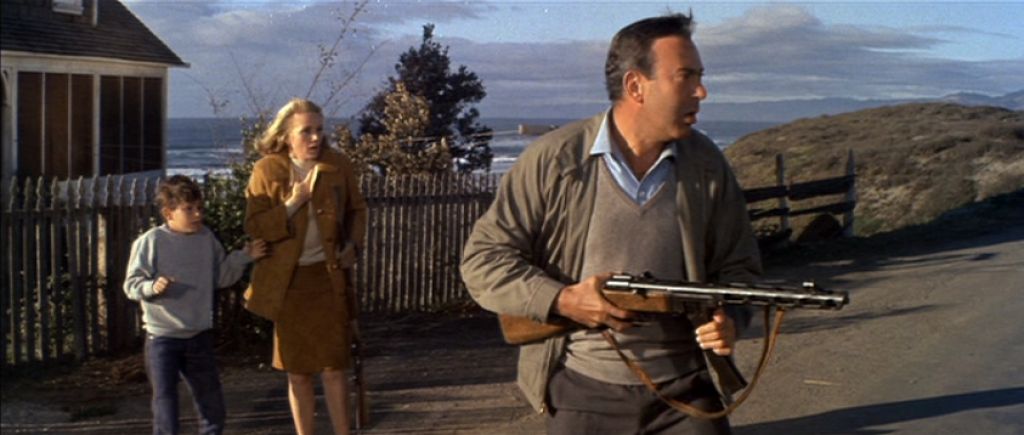
Geopolitical Tensions and the Fear of Soviet Invasion in 1960s America
The 1960s marked a period of heightened Cold War tensions, characterized by proxy wars, espionage scandals, and the ever-present threat of nuclear escalation. The Soviet Union, under Nikita Khrushchev, pursued an aggressive expansionist policy, while the U.S. adopted a strategy of containment, seeking to limit Soviet influence globally. This rivalry reached its peak during the Cuban Missile Crisis (1962), a 13-day standoff where the world teetered on the brink of nuclear war after the USSR deployed missiles in Cuba. The crisis left Americans acutely aware of their vulnerability, reinforcing the belief that Soviet aggression could strike at any moment.
In response, the U.S. government implemented Civil Defense preparedness programs, including: - Fallout Shelter Construction: By 1963, over 44,000 public fallout shelters were built across the country, with additional private shelters encouraged through federal incentives. - Duck and Cover Drills: Schools nationwide adopted the "Bert the Turtle" program, teaching children to drop, cover, and hold during a nuclear attack. - Propaganda Campaigns: Films like The Atomic Cafe (1982, though produced later) and government-approved documentaries depicted Soviet invaders as relentless, inhuman forces, while newsreels exaggerated the threat of communist infiltration.
The fear was not merely theoretical; it was reinforced by real incidents, such as the U-2 spy plane shootdown (1960), where a CIA aircraft was intercepted over Soviet territory, leading to a diplomatic crisis. These events created a climate where even a misplaced fishing boat—as depicted in The Russians Are Coming—could be perceived as a potential invasion force.
Chronological Comparison: Real-Life Cold War Events and Their Impact on Public Perception
The following table outlines key Cold War incidents that paralleled the film’s themes, illustrating how propaganda and real-life events shaped American anxiety. Each entry includes the event, its immediate consequences, and its long-term effect on public perception, demonstrating the film’s satirical yet grounded approach to Cold War fears.
| Year | Event | Immediate Consequences | Long-Term Impact on Public Perception | Parallel in The Russians Are Coming |
|---|---|---|---|---|
| 1947 | Truman Doctrine and Containment Policy | U.S. pledges to contain Soviet expansion; begins Marshall Plan aid to Europe. | Instills belief that communism is an existential threat, leading to widespread surveillance (e.g., McCarthyism) and military buildup. | The film’s premise—Russians as an unexpected, unwelcome force—mirrors the broader fear of communist infiltration. |
| 1950-1953 | Korean War | First "hot" conflict of the Cold War; U.S. and USSR-backed forces clash directly. | Reinforces idea of Soviet aggression; leads to increased military spending and civil defense initiatives. | The town’s initial reaction—assuming the Russians are spies or saboteurs—reflects post-Korean War paranoia. |
| 1957 | Sputnik Launch and "Missile Gap" Fear | USSR launches first artificial satellite, sparking panic over perceived U.S. technological inferiority. | Accelerates space race; leads to public school emphasis on math/science and fears of Soviet dominance. | The Russians’ "advanced" submarine technology (though accidental) plays into the myth of Soviet superiority. |
| 1961 | Bay of Pigs Invasion | CIA-backed Cuban exiles fail to overthrow Fidel Castro’s communist government. | Undermines U.S. credibility; Khrushchev gains confidence, leading to Berlin Wall construction. | The film’s absurdity—Russians being stranded—contrasts with real failures of U.S. intelligence operations. |
| 1962 | Cuban Missile Crisis | 13-day standoff over Soviet nuclear missiles in Cuba; closest the world came to nuclear war. | Massive increase in fallout shelter construction; public drills become routine. | The town’s panic over "Russian invaders" mirrors the collective dread of nuclear annihilation. |
| 1963 | Partial Nuclear Test Ban Treaty | U.S. and USSR agree to limit atmospheric nuclear tests, easing tensions temporarily. | Brief lull in Cold War fears; public begins to question the efficacy of civil defense measures. | The film’s release in 1966, post-treaty, suggests a shift from outright fear to satirical critique. |
The table highlights how each event contributed to a culture of suspicion, where even benign encounters—like the Russians in the film—could be misinterpreted as hostile acts. The film’s humor arises from this very tension, exposing the absurdity of Cold War logic.
Soviet-American Relations in the 1960s: Key Incidents Shaping The Russians Are Coming
The Soviet Union’s actions in the 1960s were often perceived through the lens of American propaganda, portraying the USSR as an expansionist, ideologically rigid adversary. However, the reality was more nuanced, with moments of both confrontation and cautious diplomacy. Key incidents that influenced The Russians Are Coming include:
- The U-2 Spy Plane Incident (1960): A CIA U-2 aircraft was shot down over Soviet territory, leading to the collapse of the Paris Summit and deepening distrust. The film’s portrayal of Russians as bumbling yet dangerous reflects this era’s espionage paranoia. - The Berlin Crisis (1961): Khrushchev’s construction of the Berlin Wall symbolized the hardening of Cold War divisions. The film’s setting—a small, isolated town—mirrors the psychological isolation Americans felt from Soviet influence. - The Cuban Missile Crisis (1962): The closest the world came to nuclear war reshaped American perceptions of Soviet intentions. The film’s absurd premise—Russians accidentally landing—can be read as a subversive commentary on how easily miscommunication could escalate tensions. - Detente and the Partial Test Ban Treaty (1963): A brief thaw in relations saw limited arms control agreements. The film’s release in 1966, during a period of relative calm, allowed for satire rather than outright propaganda.
These incidents created a backdrop where the Soviet Union was simultaneously feared and misunderstood, a dynamic The Russians Are Coming exploits through
Plot Breakdown and Satirical Elements in The Russians Are Coming
The Russians Are Coming (1966) presents a satirical narrative where a Soviet submarine, lost due to navigational errors, accidentally surfaces near a quiet New England fishing village. The film’s premise serves as a microcosm of Cold War-era paranoia, transforming an absurd situation into a critique of media hysteria, bureaucratic incompetence, and societal overreactions. The plot unfolds as a series of escalating misunderstandings, where the townsfolk—initially unaware of the submarine’s true origin—gradually realize the gravity of the situation, only to trigger a chain reaction of panic. The film’s structure mirrors the progression of a crisis, using humor to dissect how fear and misinformation distort rational judgment.
The narrative’s satirical edge lies in its ability to juxtapose the mundane with the apocalyptic, revealing how easily societal norms collapse under perceived threats. The progression from a fishing boat’s encounter with the submarine to the deployment of the National Guard exposes the fragility of trust in institutions and the media’s role in amplifying chaos. Below is a breakdown of the film’s key plot stages, paired with their satirical targets, illustrated through a table for clarity.
Progression of the Plot and Satirical Targets
The film’s plot can be divided into distinct phases, each targeting a specific aspect of American society during the Cold War. The table below maps these stages alongside their satirical critiques, emphasizing how the film’s humor dismantles institutional failures and public irrationality.
| Plot Stage | Key Events | Satirical Target | Comedic Effect |
|---|---|---|---|
| First Sighting |
|
|
The absurdity of the crew’s initial confusion—assuming the submarine is American—highlights how easily misinformation spreads when institutions fail to communicate effectively. |
| Military Mobilization |
|
|
The contrast between the submarine crew’s attempts to resolve the situation diplomatically and the townsfolk’s descent into panic underscores the film’s critique of institutional rigidity. |
| Escalation of Paranoia |
|
|
The film’s use of slapstick—such as the town’s frantic attempts to "defend" against a non-existent attack—heightens the satire by revealing how illogical fear-driven behavior can be. |
| Resolution and Revelation |
|
|
The resolution’s absurdity—where the "villains" become heroes by outsmarting the system—serves as a final jab at the rigidity of Cold War ideologies. |
| Climax |
|
|
The film’s ending leaves audiences with a wry smile, recognizing that while the immediate crisis is resolved, the underlying issues of paranoia and miscommunication remain unresolved. |
Critique of American Society Through Overreactions and Media Hysteria
The Russians Are Coming excels in exposing the flaws of American institutions by exaggerating their responses to perceived threats. One of the film’s most effective satirical tools is the portrayal of local authorities, who escalate the situation from a minor incident into a full-blown crisis. For example, Mayor Billings’ bumbling attempts to manage the situation—such as his insistence on treating the submarine as an immediate threat despite evidence to the contrary—highlight the incompetence of leadership during emergencies. His famous line, "We’ve got to do something!", encapsulates the film’s critique of reactive governance, where actions are taken without strategic thought
Character Analysis and Performances in The Russians Are Coming: Archetypes, Satire, and Cold War Personas
The Russians Are Coming (1966) thrives on its sharp characterizations, which serve as exaggerated mirrors of Cold War-era anxieties, bureaucratic incompetence, and small-town paranoia. Each protagonist and antagonist embodies a distinct archetype, their traits and interactions amplifying the film’s satirical edge. The performances by Carl Reiner, Walter Matthau, and Janet Leigh—rooted in their real-life comedic personas—elevate the satire, blending slapstick with poignant social commentary. Meanwhile, the dynamic between the Soviet crew and the American townsfolk exposes cultural clashes through humor, while supporting characters like the overzealous reporter and the clueless general underscore broader themes of media sensationalism and military inefficiency. Even the film’s costumes and props function as visual shorthand, reinforcing stereotypes and heightening the farcical tone.
Main Characters as Cold War Archetypes: Traits and Comic Motivations
The film’s central figures are distilled into archetypes that reflect societal fears and bureaucratic absurdities of the 1960s. Their defining traits and motivations are not just sources of comedy but also tools to critique Cold War hysteria.
-
Mayor Clarendon (Carl Reiner)
The mayor represents the bumbling, self-important local politician, a figure who prioritizes appearances over competence. His traits include:
- A narcissistic preoccupation with protocol, such as his insistence on formalities (e.g., insisting the Soviets address him as "Mr. Mayor" despite the chaos unfolding).
- Chronic indecisiveness, exemplified by his inability to act decisively during the crisis, instead deferring to higher authorities.
- Class-consciousness, evident in his discomfort with the Soviets’ working-class demeanor and his attempts to impress them with empty gestures (e.g., offering them a tour of his "pristine" town).
- Comic motivations: His desire to avoid blame and maintain his reputation drives his actions, often leading to disastrous outcomes. His panic escalates as the situation spirals, culminating in his absurd attempts to "negotiate" with the Soviets by offering them a golf course as compensation.
-
Captain Belikov (Walter Matthau)
Belikov, the Soviet submarine commander, embodies the stoic, disciplined communist officer—a figure both feared and caricatured in American media. His defining traits include:
- Military rigidity, reflected in his adherence to orders (e.g., his initial refusal to surface despite the crisis, despite his crew’s pleas).
- Dry, understated humor, which contrasts sharply with the Americans’ hysteria. His deadpan delivery of lines like "We are not here to make war" underscores the absurdity of the situation.
- Cultural naivety, such as his confusion over American customs (e.g., mistaking a golf club for a weapon).
- Comic motivations: His primary goal is to avoid diplomatic incident while also subtly mocking American paranoia. His gradual shift from stern authority to reluctant participant in the town’s chaos mirrors the film’s tone.
-
Mrs. Pigeon (Janet Leigh)
The widow of the town’s late mayor, Mrs. Pigeon, serves as the voice of reason and unexpected leadership in a town dominated by men. Her traits include:
- Practicality and common sense, which contrast with the mayor’s bluster and the general’s incompetence.
- Warmth and hospitality, exemplified by her willingness to help the stranded Soviets, despite her town’s hostility.
- Subtle authority, as she takes charge in moments of crisis (e.g., organizing the Soviets’ escape when the mayor fails).
- Comic motivations: Her motivation to restore order stems from her genuine concern for her town, not political posturing. Her interactions with Belikov reveal a mutual respect, undermining the film’s broader stereotypes.
Actors’ Real-Life Personas and Their Satirical Delivery
The film’s cast leveraged their established comedic personas to deepen the satire, using their delivery styles to highlight the absurdity of Cold War tensions. Their performances oscillate between broad comedy and nuanced social commentary, creating a layered critique.
-
Carl Reiner as Mayor Clarendon
Reiner, already known for his physical comedy and neurotic characters (e.g., The Dick Van Dyke Show), brings a frantic, sweaty energy to Clarendon. His performance is a masterclass in exaggerated politicking, where every gesture—from his sweating brow to his fidgeting with his tie—signals his internal panic.
"I’m the mayor! I’m in charge here!" — Delivered with a mix of desperation and delusion, this line encapsulates Clarendon’s delusional authority. Reiner’s high-pitched, pleading tone contrasts with the absurdity of the situation, making the mayor’s incompetence even more hilarious.
-
Walter Matthau as Captain Belikov
Matthau, a veteran of comedic roles with a knack for deadpan delivery, imbues Belikov with an air of reluctant exasperation. His performance balances authoritarian sternness with unexpected warmth, particularly in his interactions with Mrs. Pigeon. Matthau’s ability to convey dry amusement without cracking a smile makes Belikov’s scenes some of the film’s most effective satire.
"We are not here to make war. We are here to fish." — Matthau’s slow, deliberate pacing and monotone delivery make the line both funny and poignant, highlighting the absurdity of the Americans’ fear of a "Soviet invasion" that never was.
-
Janet Leigh as Mrs. Pigeon
Leigh, known for her dramatic roles, surprises here with a warm, grounded performance that serves as the film’s moral center. Her soft-spoken, measured delivery contrasts with the chaos around her, making her the voice of sanity. Leigh’s ability to convey both kindness and firmness (e.g., scolding the mayor for his incompetence) adds depth to the satire.
"You’re not going to start a war over a few fish, are you?" — Leigh’s gentle but firm tone underscores the film’s critique of American paranoia, while also humanizing the Soviets.
Cultural Clash: Soviet Crew vs. American Townsfolk
The dynamic between the Soviet crew and the American townsfolk is a microcosm of Cold War tensions, played for comedic effect. Their interactions reveal stark differences in communication styles, crisis management, and cultural norms. Below is a comparison of their behaviors:
| Behavioral Trait | Soviet Crew (Belikov, et al.) | American Townsfolk (Mayor, General, Reporter) | ||||||||||||||||||||||||||||||||||||||||||||||
|---|---|---|---|---|---|---|---|---|---|---|---|---|---|---|---|---|---|---|---|---|---|---|---|---|---|---|---|---|---|---|---|---|---|---|---|---|---|---|---|---|---|---|---|---|---|---|---|---|
| Communication Style | Direct, concise, and literal. Speak in short sentences with minimal embellishment. Avoids sarcasm or hyperbole. | Overly dramatic, prone to exaggeration, and filled with bureaucratic jargon. Uses euphemisms (e.g., "incident" instead of "disaster"). | ||||||||||||||||||||||||||||||||||||||||||||||
| Reaction to Crisis | Methodical and pragmatic. Focuses on problem-solving (e.g., repairing the submarine, finding food). Shows resilience under pressure. | Panicked and reactive. Prioritizes perception over action (e.g., hiding the Soviets, calling in the military). Escalates the situation with inaction. | ||||||||||||||||||||||||||||||||||||||||||||||
| View of Authority | Respects hierarchy but questions orders when necessary (e.g., Belikov’s crew challenges his decisions). | Blindly defers to authority figures (e.g., the mayor follows the general’s absurd orders). | ||||||||||||||||||||||||||||||||||||||||||||||
| Cultural Customs | Unfamiliar with American customs (e.g., mistaking a golf club for
Themes and Social Commentary in The Russians Are Coming: A Satirical Mirror to Cold War AmericaThe Russians Are Coming (1966) transcends its lighthearted premise to deliver a biting critique of Cold War-era America, where paranoia, bureaucratic incompetence, and cultural miscommunication fueled societal anxieties. Norman Jewison’s film employs satire and dark humor to dissect the irrational fears of the era, using exaggerated scenarios to highlight real systemic flaws. Through its portrayal of small-town America’s overreaction to a harmless Soviet submarine crew, the film exposes how propaganda, government inefficiency, and xenophobia distorted public perception. Themes of fearmongering, miscommunication, and the absurdity of geopolitical tensions are not merely comedic devices but sharp observations of a nation gripped by ideological conflict. The film’s commentary extends beyond Cold War anxieties, reflecting broader social tensions of the 1960s, including distrust in institutions and the human tendency to project threat onto the unfamiliar. By juxtaposing the Soviet crew’s innocence with the American townsfolk’s hysteria, Jewison critiques how cultural stereotypes and political rhetoric dehumanize entire populations, a theme that remains eerily relevant in modern geopolitical discourse.Critique of American Paranoia and Government InefficiencyThe Russians Are Coming systematically dismantles the myth of American preparedness during the Cold War, illustrating how fear—often stoked by media and political figures—paralyzed rational decision-making. The film’s critique is structured around two primary themes: "Fear of the Other" and "Government Inefficiency," both of which are amplified through exaggerated yet plausible scenarios. The following table outlines key scenes that embody these themes, demonstrating how the film satirizes societal and institutional failures:
Miscommunication and Cultural Stereotypes in Cold War AmericaAt its core, The Russians Are Coming explores how cultural misunderstandings and linguistic barriers fueled Cold War tensions. The film’s premise—where Soviet submariners, stranded in a small New England town, are mistaken for spies—highlights how stereotypes and lack of direct communication exacerbated geopolitical conflicts. The Soviet crew’s attempts to communicate their benign intentions are repeatedly misinterpreted. For instance, their request for a phone call to Moscow is seen as suspicious, while their chess game is framed as a sinister plot. These scenes parallel real Cold War incidents where signaling failures led to misjudgments. One notable example is the 1983 Soviet nuclear false alarm, where a malfunctioning satellite detection system nearly triggered a retaliatory strike because miscommunication between U.S. and Soviet early-warning systems was not properly addressed. The film also satirizes the American stereotype of Soviets as brutish or sinister, a narrative perpetuated by Hollywood films like Dr. Strangelove (1964) and propaganda campaigns. In contrast, the Soviet crew in The Russians Are Coming are portrayed as polite, well-mannered, and even humorous—directly challenging the era’s demonization of the USSR. This subversion serves as a commentary on how cultural narratives shape foreign policy, a dynamic that persists today in media portrayals of Russia, where figures like Vladimir Putin are often reduced to caricatures of authoritarianism. The film’s humor arises from the absurdity of these misunderstandings, but its underlying message is serious: geopolitical conflicts are often rooted in failed communication and dehumanization. This theme resonates with modern examples, such as the 2018 U.S.-Russia diplomatic tensions over the Skripal poisoning case, where mutual accusations and lack of transparency escalated tensions without concrete evidence.Blockquote: Direct Satire on Social IssuesThe film’s dialogue is replete with lines that encapsulate Cold War anxieties, often delivered with a straight face to heighten their satirical impact. Below are key quotes that reflect societal fears and institutional failures:"We’re not ready for this!" — Mayor (Alvin Greenman) Implication: This line underscores the sheer unpreparedness of local and federal governments to handle perceived threats. It critiques the culture of denial in Cold War America, where despite constant warnings of nuclear war, no contingency plans were in place for smaller-scale "invasions." The mayor’s panic reflects the broader public sentiment of vulnerability, despite the U.S. being a nuclear superpower. "They’re not here to invade, they’re here because their boat broke down!" — Roy Podowski (George Kennedy) Implication: This exchange highlights the absurdity of conflating technical failure with malicious intent. The line serves as a reminder that geopolitical tensions often ignore human factors, such as accidents or miscommunication. It also critiques the dehumanization of enemies, where even a broken submarine is framed as an act of war. "We’ve got to get those Russians out of here before they start a war!" — Local Militia Member Implication: The militia’s overreaction satirizes the militarization of everyday life during the Cold War. The line reflects how propaganda and media turned ordinary events into national security crises, a pattern seen in modern "war on terror" rhetoric, where terms like "enemy combatants" are applied to non-combatants.These quotes reveal how The Russians Are Coming uses humor to expose the irrationality of fear-based policies. The film’s satire is timely, as similar rhetoric persists in contemporary political discourse, where terms like "foreign interference" or "existential threats" are often weaponized without substantive evidence. Humor as a Coping Mechanism: Comedy in Cold War Political SatireThe Russians Are Coming exemplifies how dark comedy and satire served as coping mechanisms during the Cold War, allowing audiences to process anxieties in a safe, exaggerated form. The film’s blend of slapstick and social commentary reflects a broader trend in 1960s cinema, where directors like Stanley Kubrick (Dr. Strangelove) and Mel Brooks (The Producers) used humor to critique political absurdity. Historically, comedy hasProduction Details and Behind-the-Scenes Insights of The Russians Are ComingThe Russians Are Coming (1966) stands as a masterclass in blending practical effects with narrative innovation, particularly in its groundbreaking depiction of a Soviet submarine on American soil. The film’s production faced logistical hurdles, creative compromises, and a tight budget that demanded ingenuity from director Norman Jewison and his team. Behind the scenes, the project evolved through script revisions, on-set improvisations, and a marketing strategy that subtly navigated Cold War-era sensibilities. These elements collectively shaped the film’s final form, balancing satire with the era’s geopolitical anxieties.Filming a Submarine on Land: Practical Effects and Set Design InnovationsCreating the illusion of a Soviet submarine navigating coastal waters required solutions that were both cost-effective and visually convincing. The film’s production team, led by production designer Albert Brenner, constructed a full-scale, functional submarine set at the Universal Studios backlot, using a repurposed WWII-era submarine hull as a base. The interior was meticulously designed to reflect Soviet naval aesthetics, complete with authentic instrumentation, dials, and crew quarters. To simulate the submarine’s movement underwater, the set was mounted on a hydraulic platform that tilted and vibrated, while water tanks surrounded the hull to create the illusion of depth. For exterior shots, the team employed miniature models of the submarine, scaled to 1:10, which were filmed against back projections of Cape Cod’s coastline. The miniatures were animated using stop-motion techniques, a labor-intensive process that required precise synchronization with live-action footage. One of the most notable challenges was capturing the submarine’s emergence from the water—achieved by slowly lowering the model into a water tank while filming from below, then reversing the footage for the surfacing effect. The result was a seamless blend of practical effects and optical illusions that remained groundbreaking for its time. The set design extended beyond the submarine to include detailed recreations of coastal towns, particularly Hampton, Massachusetts, where much of the film was set. Universal’s art department constructed full-scale facades of buildings, complete with period-accurate details such as 1960s-era signage, fishing boats, and residential architecture. The town square set was designed to feel lived-in, with practical props like fishing nets, lobster traps, and local shops to enhance authenticity. The film’s night scenes were particularly challenging, requiring specialized lighting rigs to mimic the eerie glow of submarine periscopes and searchlights.Budget Allocation: Special Effects, Locations, and Studio InvestmentsThe Russians Are Coming was produced on a modest budget of approximately $6 million (equivalent to roughly $55 million today), a sum that reflected Universal’s confidence in the project’s commercial potential while necessitating careful financial planning. The budget was allocated across key areas, with special effects and location shoots consuming the largest portions. Below is a breakdown of the estimated expenditures, based on production records and industry reports:
Script Changes: Deleted Scenes and Alternate Endings Influenced by Studio NotesThe original script for The Russians Are Coming underwent substantial revisions due to studio interference, Cold War-era censorship concerns, and budget constraints. Early drafts included more overtly political dialogue, with characters engaging in direct critiques of McCarthyism and military paranoia. However, Universal executives, wary of alienating audiences or government regulators, toned down the satire in favor of a lighter, more comedic tone. One of the most notable deleted scenes involved a prolonged argument between the submarine crew and the American townsfolk, where the Soviets openly mocked U.S. Cold War propaganda. In an early version, the captain (Efrem Zimbalist Jr.) delivers a monologue about the absurdity of nuclear brinkmanship, stating:"You Americans think you’re so brave, always ready to push the button. But tell me—how many of you have ever even seen a real war? You fight with words, with committees, with laws. We fight with bullets. And yet, you call us the aggressors."This scene was cut entirely, as studio executives feared it would offend military audiences or trigger backlash from anti-communist groups. Instead, the film’s satire was subtly woven into character dynamics, such as the miscommunication between the Soviets and Americans, which highlighted the mutual misunderstanding of the Cold War era. Another major script change involved the film’s original ending, which was far darker and more ambiguous. In the discarded version, the submarine fails to return to Russia, stranding the crew in America. The final scene shows the Soviet captain and the American mayor (Kennedy) standing on a cliff, staring at the horizon as the submarine’s fate remains uncertain. This ending was rejected by Universal as "too bleak" for a comedy, and the studio insisted on a resolution where the submarine is safely returned to Russia, albeit with the Americans retaining the crew’s personal effects as a symbolic gesture of détente. The timing of these changes also reflected Cold War developments. The film’s principal photography began in early 1966, just as U.S.-Soviet tensions were easing following the Cuban Missile Crisis (1962) and the Outer Space Treaty (1967). The studio likely softened the script to align with the emerging thaw in superpower relations, ensuring the film would be less controversial upon release. Additionally, the assassination of President John F. Kennedy (1963) and the subsequent shift in U.S. foreign policy under Lyndon B. Johnson influenced the tone, as anti-communist rhetoric was becoming less Legacy and Cultural Impact of The Russians Are ComingUpon its release in 1966, The Russians Are Coming! emerged as a sharp yet playful critique of Cold War paranoia, blending slapstick comedy with biting satire. The film’s reception reflected the era’s cultural tensions, where audiences grappled with the absurdity of nuclear anxiety while simultaneously seeking escapism. Critics initially praised its subversive humor, though some dismissed it as overly simplistic compared to the darkly comedic Dr. Strangelove. Over time, however, the film’s legacy solidified as a foundational work in political satire, influencing generations of filmmakers and media creators. Its themes—miscommunication, xenophobia, and bureaucratic incompetence—remain eerily relevant, resonating in modern discussions about media manipulation, global tensions, and the fragility of public trust. The film’s impact extends beyond its initial box-office performance, which, while modest, grew through word-of-mouth and cult appeal. Contemporary reviews highlighted its unique balance of humor and social commentary, with The New York Times calling it "a delightful farce that pokes fun at American paranoia without losing its heart." Variety noted its "clever script and spirited performances," though some critics, like Roger Ebert, initially found its tone too lighthearted for the gravity of Cold War fears. Despite mixed reactions, the film’s ability to distill complex geopolitical anxieties into relatable, comedic scenarios ensured its place in cinematic history.Critical Reception and Initial Audience ResponseThe Russians Are Coming! premiered during a period when Cold War tensions were at their peak, yet American audiences were also craving relief from the era’s pervasive dread. The film’s release in June 1966 coincided with heightened public awareness of Soviet-American standoffs, including the Cuban Missile Crisis just two years prior. Critics and viewers alike responded to its satire with a mix of amusement and recognition, though reactions varied based on political leanings. Positive reviews often emphasized the film’s ability to disarm its audience through humor, with The Hollywood Reporter stating: > "Norman Jewison’s direction transforms a potentially heavy-handed script into a breezy, crowd-pleasing comedy that never takes itself too seriously." Conversely, some conservative critics, like those at The Christian Science Monitor, questioned whether the film trivialized Cold War threats: > "While the humor is undeniable, one wonders if laughter is the best response to the very real dangers of nuclear confrontation." Audiences, however, largely embraced the film’s irreverence. Box-office returns were modest but steady, and the movie gained traction through positive word-of-mouth, particularly among younger viewers who saw its satire as a refreshing departure from the grim realism of Cold War dramas like Fail-Safe (1964). The film’s success was further bolstered by its re-release in 1972, capitalizing on renewed Cold War anxieties during the Vietnam era.Influence on Later Comedies and Satirical WorksThe Russians Are Coming! laid the groundwork for a wave of comedies that used absurdity to critique political and social issues. Its blend of physical comedy, mistaken identity, and Cold War paranoia directly inspired later films and TV shows, particularly those that employed satire to address global tensions. Below are key works that cite it as a direct or indirect influence:Modern Relevance and Themes in Contemporary DiscourseWhile The Russians Are Coming! is rooted in 1960s Cold War anxieties, its themes—misinformation, xenophobia, and institutional incompetence—remain strikingly relevant today. The film’s exploration of how societies react to perceived threats mirrors modern concerns about fake news, foreign interference, and the erosion of public trust in media and government.Cultural References and Pop Culture HomagesThe Russians Are Coming! has left an indelible mark on pop culture, with its tropes and scenarios appearing in various forms of media. These references range from direct parodies to subtle Easter eggs, often serving as shorthand for Cold War-era absurdity.The Russians Are Coming endures not just as a relic of Cold War cinema but as a timeless examination of how fear distorts reality—and how laughter can be the most effective antidote. By turning the specter of Soviet invasion into a farce, the film forces audiences to confront the irrationality of their own anxieties, a technique as relevant today as it was in 1966. Its legacy lies in its ability to make us question: How much of our paranoia is manufactured, and how easily could history repeat itself in a new guise? The answer, the movie suggests, is far too close for comfort. |
Leave a Comment
Comments are moderated before appearing. The data you submit is processed according to the Privacy Policy of Vetlife Archive.