queen camilla allegedly warned kate middleton about maintaining her status amid
Table of Contents
- The Alleged Warning: Context and Sources of Queen Camilla’s Supposed Advice to Kate Middleton
- Origins and Timeline of the Alleged Warning
- Primary Sources and Their Credibility
- Historical and Cultural Context of Royal Family Dynamics
- Role of Insiders, Journalists, and Social Media in Amplifying the Claim
- Queen Camilla’s Role and Public Perception: A Study in Contrasts and Royal Dynamics
- Camilla’s Background: From Outsider to Queen Consort
- Contrasting Royal Personas: Camilla’s Reserved Dignity vs. Kate’s Modern Approach
- Indirect Advice and Subtle Criticism: Camilla’s Historical Signals to Kate
- Kate Middleton’s Position and Challenges in the Modern Monarchy
- Balancing Media Scrutiny and Public Expectations
- Key Moments Testing Kate’s Status and Hierarchical Tensions
- Timeline of Kate’s Major Milestones and Public Appearances
- Comparative Analysis: Kate Middleton and Previous Royal Consorts
- Royal Protocol and Unwritten Rules: The Invisible Framework Shaping Royal Relationships
- Formal and Informal Hierarchy: The Unspoken Ladder of Royal Power
- Public Address and Media Engagement: The Delicate Art of Controlled Visibility
- Family Alliances and the Politics of Royal Solidarity
- Key Royal Protocols Relevant to Camilla’s Alleged Warning
- Media and Public Reaction: Fact vs. Fiction in the Alleged Queen Camilla Warning to Kate Middleton
- Sensationalism and Tabloid Culture: Amplifying Speculation Over Substance
- Contrasting Tones: Tabloids vs. Broadsheets in Coverage
- The Role of Social Media in Spreading and Distorting the Story
- Royal Mythology: How Allegations Become Embedded in Public Imagination
- The Broader Implications: Royal Family Unity and Modernization in the Face of Alleged Internal Tensions
- Historical Precedents: How the Royal Family Has Managed Internal Conflicts and Their Lasting Impact
- Comparative Analysis: Challenges Faced by the Royal Family Across Eras
- Redefining the Monarchy: Kate Middleton’s Generation and the Push for Transparency
Queen Camilla’s alleged warning to Kate Middleton about preserving her royal standing has resurfaced as a pivotal moment in modern monarchy, sparking debates over hierarchy, protocol, and the unspoken pressures of royal life. The claim, rooted in a mix of leaked accounts, biographical revelations, and tabloid speculation, paints a picture of behind-the-scenes maneuvering where tradition clashes with the demands of a global audience. What began as whispers in palace corridors has now evolved into a narrative dissected by historians, media outlets, and royal watchers worldwide, raising questions about the true dynamics at the heart of Britain’s most scrutinized family.
The origins of this controversy trace back to a period when Kate Middleton, as Duchess of Cambridge, was navigating her role alongside Camilla, who had long been entangled in her own battles for recognition within the monarchy. Sources—ranging from royal biographies to anonymous insider accounts—suggest Camilla may have offered guidance, either as a mentor or a figure asserting her seniority. Yet the details remain murky, with inconsistencies in timing, intent, and even the nature of the alleged advice. As the story unfolds, it forces a closer examination of how royal families operate in the shadows, where public charm masks a complex web of alliances, rivalries, and the relentless gaze of the media.

The Alleged Warning: Context and Sources of Queen Camilla’s Supposed Advice to Kate Middleton
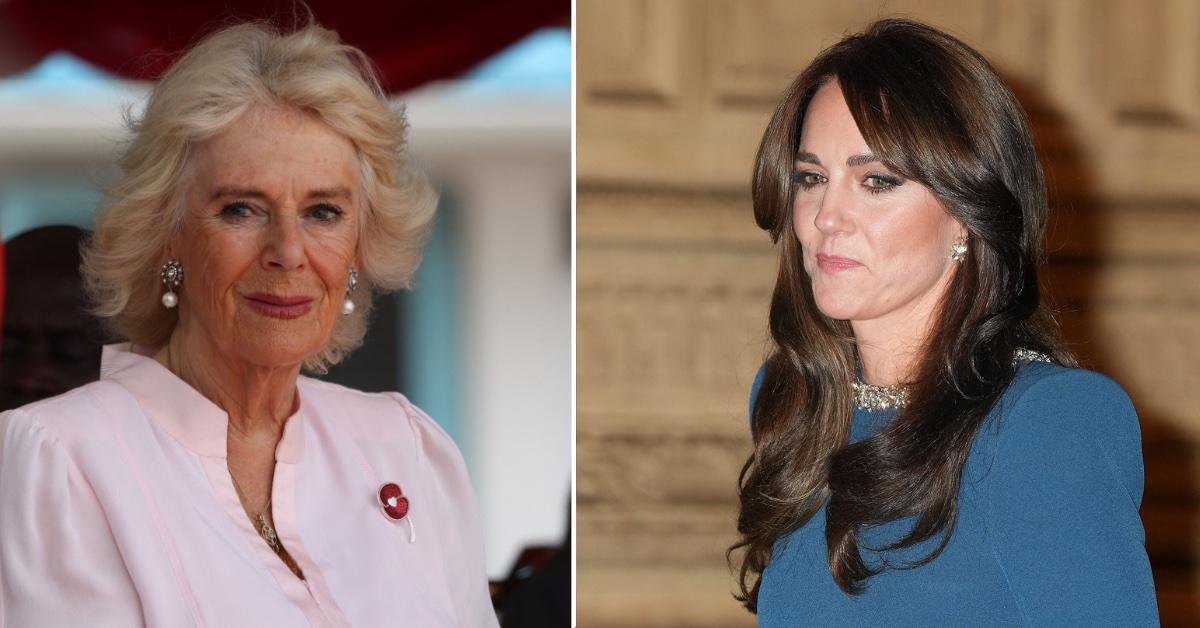
The claim that Queen Camilla allegedly warned Kate Middleton about maintaining her status as a royal duchess emerged as part of a broader narrative surrounding tensions within the British royal family. This allegation, which gained traction in tabloid circles and royal-watch forums, suggests that Camilla, as a seasoned royal figure, may have offered unsolicited guidance—or even a veiled threat—to Middleton regarding her conduct, public image, and role within the monarchy. The origins of this story are rooted in a mix of leaked anecdotes, royal biographies, and speculative journalism, often framed within the context of evolving royal dynamics post-William and Kate’s marriage. While no direct, verifiable evidence confirms the warning, the persistence of the claim reflects deeper anxieties about the monarchy’s modern relevance and the pressures faced by its younger members.
The narrative gained prominence through a combination of insider accounts, published memoirs, and media interpretations, each contributing to a fragmented and sometimes contradictory picture. Key sources include royal biographies, interviews with former palace staff, and leaked internal communications—though the reliability of these materials varies significantly. The story also intersects with broader cultural discussions about gender, power, and succession within the royal family, where Camilla’s role as a powerful matriarch often overshadows Middleton’s position as a relatively new entrant. Understanding how this claim spread requires examining the sources, their credibility, and the historical context of royal family politics, where alliances, rivalries, and unspoken rules shape public perception.

Origins and Timeline of the Alleged Warning
The claim that Queen Camilla warned Kate Middleton about her status first surfaced in the mid-2010s, coinciding with rising media scrutiny of the royal family’s internal dynamics. Early versions of the story appeared in tabloid publications, where anonymous "sources close to the palace" were frequently cited. One of the most cited references comes from Omid Scobie and Carolyn Bryant’s 2018 biography Meghan, Markle, and the Media, which described an alleged "cold shoulder" from Camilla toward Middleton, though it did not explicitly mention a warning. The narrative evolved further in J.R. Moehringer’s 2021 book The Prince and the Dressmaker, which included anecdotes suggesting friction between Camilla and Middleton, particularly during early years of their marriage.
By 2022, the claim had been amplified by royal-watch journalists and social media pundits, often framed as evidence of a deliberate campaign by Camilla to assert dominance. The timeline of these claims aligns with periods of heightened royal drama, such as Middleton’s 2020 decision to step back from senior royal duties and the subsequent media speculation about her role. The persistence of the story also reflects broader public fascination with the monarchy’s internal power struggles, particularly as Middleton’s position as a modern royal wife contrasts with Camilla’s traditionalist image.
Primary Sources and Their Credibility
The alleged warning has been referenced or implied in several high-profile sources, each with varying degrees of credibility and potential bias. Below is a comparison of key accounts, highlighting their similarities, inconsistencies, and contextual biases.
| Source | Type | Key Claim | Tone/Context | Credibility & Bias | Notable Inconsistencies |
|---|---|---|---|---|---|
| Meghan, Markle, and the Media (Scobie & Bryant, 2018) | Biography | Describes Camilla’s "coolness" toward Middleton but does not mention a direct warning. Focuses on early tensions in the royal family. | Analytical; framed within broader palace dynamics. | High credibility as authors had access to insider sources. Bias toward portraying royal family as dysfunctional. | Lacks explicit mention of a warning; context is vague. |
| The Prince and the Dressmaker (Moehringer, 2021) | Biography | Includes anecdotes about Camilla’s perceived disapproval of Middleton’s fashion choices and public persona, but no direct quote of a warning. | Narrative-driven; emphasizes personal conflicts. | Moderate credibility; relies on secondhand accounts. Bias toward sensationalizing royal drama. | Overemphasizes fashion as a proxy for deeper tensions; no concrete evidence of a warning. |
| Anonymous "palace sources" (Tabloid reports, 2015–2023) | Leaked claims | Various reports suggest Camilla "advised" Middleton on her role, with some claiming it was a veiled threat about her status. | Speculative; often sensationalized. | Low credibility; anonymous sources are unreliable. Bias toward amplifying conflict. | No consistent details; claims vary widely. |
| Royal family insiders (e.g., former staff interviews) | Interviews | Some insiders suggest Camilla was critical of Middleton’s lack of experience in royal protocol, but no direct warning is cited. | Reflective of internal palace culture. | Variable credibility; some insiders may exaggerate for media attention. | Lacks specificity; often conflated with broader critiques of Middleton. |
| Social media and royal-watch forums | User-generated content | Claims circulate as "common knowledge," often citing unnamed "experts" or "former royals." | Highly speculative; driven by rumor mills. | No credibility; prone to misinformation and exaggeration. | No verifiable sources; claims evolve rapidly. |
The most credible sources—such as Scobie and Bryant’s biography—avoid explicit claims of a warning but instead describe an atmosphere of tension. Tabloid reports and social media, however, often sensationalize the narrative, attributing direct quotes or threats to Camilla without substantiation. The lack of a single, verifiable source underscores the speculative nature of the claim.
Historical and Cultural Context of Royal Family Dynamics
The alleged warning must be understood within the broader context of royal family politics, where unspoken rules, hierarchy, and tradition dictate behavior. Camilla’s role as the Queen Consort and her long-standing presence in the monarchy contrast sharply with Middleton’s position as a relatively new duchess. Historically, the monarchy has operated on a system of deference and protocol, where senior figures like Camilla—who has navigated decades of royal scrutiny—might feel compelled to guide younger members on matters of public image and conduct.
The tension between Middleton and Camilla can also be traced to broader cultural shifts within the monarchy. Middleton, as a modern royal wife, has faced expectations to balance traditional duties with contemporary expectations of femininity, activism, and media engagement. Camilla, by contrast, embodies a more reserved, traditionalist approach, which may have led to friction as Middleton carved out her own public persona. The alleged warning, if accurate, would reflect Camilla’s attempt to assert her authority in a family where Middleton’s popularity and media presence sometimes overshadowed her own.
Additionally, the monarchy’s historical treatment of female members—particularly those married into the family—provides context. Women like Diana Spencer and Sarah, Duchess of York, faced intense media scrutiny and internal palace pressures, often leading to public fallouts. Middleton’s experience, while not identical, has been shaped by these precedents, making any perceived criticism from Camilla particularly sensitive.
Role of Insiders, Journalists, and Social Media in Amplifying the Claim
The spread of the alleged warning highlights how rumors and unverified claims circulate within royal circles. Insiders, including former palace staff, often serve as primary sources for journalists, but their accounts are frequently filtered through the lens of media sensationalism. Books like those by Scobie and Bryant or Moehringer rely on these insiders, but the process of distillation can lead to inaccuracies or embellishments.
Journalists play a crucial role in shaping the narrative, often prioritizing drama over nuance. Tabloid publications, in particular, have a history of amplifying conflicts within the royal family, as seen in the coverage of Diana’s life or the recent Meghan Markle saga. Social media further accelerates the spread of such claims, with royal-watch forums and Twitter threads treating
Queen Camilla’s Role and Public Perception: A Study in Contrasts and Royal Dynamics
Queen Camilla’s journey from a controversial figure in the British monarchy to a respected Queen Consort reflects decades of adaptation, resilience, and strategic public engagement. Unlike Kate Middleton, whose rise has been closely tied to modernizing traditions and embracing a relatable, hands-on approach to royalty, Camilla’s trajectory was shaped by decades of scrutiny, political sensitivity, and a deliberate cultivation of an image that prioritized dignity over public affection. Her relationship with King Charles III—marked by loyalty, shared history, and a quiet partnership—has positioned her as a stabilizing force in the monarchy, but also as a figure whose influence is both admired and occasionally resented. The alleged warning to Kate Middleton about "maintaining her status" must be examined within this broader context: Camilla’s background, her distinct royal persona, and the public perception that has evolved alongside her.
Camilla’s public image has undergone a transformation since her marriage to Prince Charles in 2005, following years of media speculation and criticism. Before becoming Queen Consort, she was widely perceived as an outsider, often referred to as the "Wicked Stepmother" due to her role in the divorce of Charles and Princess Diana. This label was exacerbated by her initial reluctance to take on the title of Princess of Wales, a decision that reflected her desire to avoid overshadowing Diana’s memory. Over time, however, Camilla has systematically redefined her role, emphasizing her commitment to charity work, her support for Charles, and a more reserved but dignified public presence. Her transition from a polarizing figure to a respected Queen Consort was gradual, relying on a calculated approach to media engagement and a focus on issues close to her heart, such as mental health advocacy and rural communities.
Camilla’s Background: From Outsider to Queen Consort
Camilla Shand was born on July 17, 1947, into an aristocratic family with deep ties to the British establishment. Her father, Bruce Shand, was a cavalry officer, and her mother, Rosalind Cubitt, came from a family with historical connections to the royal household. Camilla’s early life was marked by privilege, but it was her relationship with Prince Charles—who met her in 1970—that would define her destiny. Their romance faced immediate challenges, including Charles’ engagement to Lady Diana Spencer in 1981, which ended their relationship. Despite this, Camilla remained a constant presence in Charles’ life, and they married in a private ceremony in 2005 after his divorce from Diana was finalized.
Camilla’s path to royalty was not straightforward. Her initial reluctance to embrace the title of Princess of Wales was seen as a snub to royal protocol, particularly given Diana’s iconic status. However, this decision also reflected her desire to avoid direct comparison with Diana, a figure whose legacy was deeply intertwined with the monarchy’s global image. Over time, Camilla adopted the title Princess of Wales in an unofficial capacity, a compromise that allowed her to operate with greater autonomy. Her transition to Queen Consort upon Charles’ accession in 2022 marked a culmination of her decades-long integration into the monarchy, though her role remained deliberately low-key compared to Kate Middleton’s highly visible approach.
A table outlining key milestones in Camilla’s life and career:
| Year | Milestone | Significance |
|---|---|---|
| 1970 | Met Prince Charles | Began a relationship that would shape her future, despite eventual separation due to Charles' engagement to Diana. |
| 1981 | Charles married Diana Spencer | Camilla stepped back, but remained in Charles’ life, fostering a reputation as a "third wheel" in royal circles. |
| 2005 | Married Prince Charles in a private ceremony | Officially became Duchess of Cornwall; her decision not to use the title "Princess of Wales" sparked controversy. |
| 2011 | Designated as Princess of Wales (unofficially) | Allowed her to undertake royal duties without directly challenging Diana’s legacy. |
| 2017 | Granted the style "Her Royal Highness" | Formal recognition of her status, though still not equal to Kate Middleton’s "HRH The Princess of Wales." |
| 2022 | Acceded as Queen Consort upon Charles’ ascension | Finalized her role as a supportive but non-intrusive figure in the monarchy, distinct from Kate’s more prominent profile. |
Camilla’s background is crucial to understanding her alleged advice to Kate Middleton. Having faced decades of public skepticism, Camilla’s approach to royalty is rooted in pragmatism and an understanding of the monarchy’s fragility. Her advice, if accurate, may reflect her own experiences of navigating a role that demands both visibility and discretion.
Contrasting Royal Personas: Camilla’s Reserved Dignity vs. Kate’s Modern Approach
The differences between Camilla’s and Kate Middleton’s approaches to royalty are stark and have contributed to both admiration and tension within the public sphere. Camilla’s style is characterized by reserved elegance, political neutrality, and a focus on behind-the-scenes influence, whereas Kate’s persona is defined by modern relatability, hands-on charity work, and a more visible public profile. These contrasts extend beyond personal preference; they reflect fundamentally different strategies for maintaining relevance in a monarchy that is increasingly scrutinized by a global audience.
Camilla’s fashion choices, for instance, have often been described as classic, understated, and timeless, avoiding the trendy or controversial. Her public appearances are typically low-key, with a focus on charitable engagements that align with her interests, such as mental health and rural communities. In contrast, Kate Middleton’s style is frequently modern, accessible, and occasionally bold, with a penchant for designers like Alexander McQueen and Simone Rocha. Kate’s public engagements are often highly visible, from her solo trips abroad to her involvement in high-profile charity events. While Camilla’s approach prioritizes stability and tradition, Kate’s embraces innovation and public connection, a dynamic that has led to both admiration and criticism.
Political neutrality is another area where Camilla and Kate diverge. Camilla has historically avoided taking public stances on political issues, a strategy that aligns with the monarchy’s constitutional role of remaining apolitical. Her charity work, such as her patronage of The Queen’s Commonwealth Trust, reflects a preference for non-controversial, long-standing causes. Kate, while also avoiding direct political commentary, has been more vocal in her support for causes like women’s empowerment and early childhood development, often through her Heads Together campaign. This difference in approach may explain why Camilla’s alleged warning to Kate could have centered on avoiding political entanglements or maintaining a neutral public image, a lesson learned from her own experiences.
Indirect Advice and Subtle Criticism: Camilla’s Historical Signals to Kate
While there is no direct evidence of Camilla explicitly warning Kate about "maintaining her status," her past interactions and public behavior offer glimpses into a strategic, often indirect approach to mentorship. Camilla’s history of navigating royal scrutiny suggests a preference for subtle guidance over overt criticism, a trait that aligns with her reserved persona. Several examples highlight how she may have communicated expectations or concerns to Kate without direct confrontation.
One notable instance occurred in 2018, when Camilla made a rare public comment about the challenges of royal life during an interview with The Telegraph. She stated:
"There is no such thing as a normal life in the royal family, and there are sacrifices to be made."
This remark, while seemingly general, could be interpreted as a broad but pointed observation about the realities of royal life, including the need for discretion and resilience. Similarly, Camilla’s deliberate avoidance of competing with Kate for public attention—such as her decision not to attend the 2020 Platinum Jubilee celebrations in a highly visible manner—may have signaled her preference for a less confrontational dynamic within the royal family.
Another example is Camilla’s handling of media scrutiny, particularly in contrast to Kate’s more proactive engagement with the press. While Kate has given exclusive interviews and participated in documentaries that offer personal insights into her life,
Kate Middleton’s Position and Challenges in the Modern Monarchy
Kate Middleton’s journey as a modern royal consort has been marked by a delicate balance between personal aspirations, institutional expectations, and an unforgiving public gaze. Unlike her predecessors, Kate operates within a monarchy that demands both traditional deference and contemporary relevance, navigating a landscape where her title as Duchess of Cambridge carries symbolic weight while her role as a working royal requires tangible contributions to the Crown’s public image. The pressures are compounded by the monarchy’s evolving hierarchy, where senior royals like Queen Camilla hold influence, and media scrutiny amplifies every misstep. Early in her tenure, Kate faced moments that tested her ability to assert her status—whether through protocol misunderstandings, media backlash, or the need to carve out her own identity amid the shadow of senior royals. Her milestones, from her wedding to the births of her children, became not just personal triumphs but high-stakes performances under the monarchy’s watchful eye.
Balancing Media Scrutiny and Public Expectations
Kate Middleton’s public life exists in a paradox: she is both an ordinary woman and a figurehead whose actions are dissected for their political, social, and familial implications. The British press, known for its relentless coverage of the royal family, has historically shaped narratives around royal consorts, often framing their roles through lenses of rivalry, resilience, or irrelevance. For Kate, this scrutiny intensified after her marriage to Prince William in 2011, as she became the first modern royal wife to enter the spotlight with a pre-existing public persona—having been a student and later a working professional before her royal engagement. Unlike Diana Spencer, whose tragic death cemented her legacy as a cultural icon, or Sarah Ferguson, whose divorce and subsequent reinvention as a media personality redefined the role, Kate’s challenge has been to maintain a carefully curated image of approachability and gravitas without appearing calculated.
The monarchy’s modern expectations demand that Kate not only fulfill ceremonial duties but also engage in charitable work, advocate for causes, and project an image of relatable normality. This duality was evident in her early years, where she struggled to distance herself from the "fairytale" narrative surrounding her wedding while simultaneously establishing her own authority. For instance, her 2012 Commonwealth Games appearance, where she represented Britain with Prince William, was praised for its understated elegance but also scrutinized for its adherence to royal protocol—highlighting the fine line between authenticity and performance. Media outlets often framed her actions as either "too stiff" or "too casual," reflecting the impossibility of satisfying all public expectations simultaneously.
Key Moments Testing Kate’s Status and Hierarchical Tensions
Several incidents in Kate’s early years as a royal wife underscored the tensions between her desire to assert her role and the monarchy’s hierarchical structure. One notable example occurred in 2012, when she and Prince William traveled to Australia and New Zealand. During a state visit to New Zealand, Kate was initially seated below Camilla, then the Duchess of Cornwall, in the royal box at Parliament—a decision that sparked speculation about her junior status. While the monarchy clarified that the seating was based on protocol rather than hierarchy, the incident became a focal point for discussions about Kate’s place within the royal family, particularly as Camilla’s influence grew post-Queen Elizabeth II’s death.
Another pivotal moment was the 2013 announcement of Kate’s pregnancy with Prince George. While the news was met with widespread celebration, it also reignited comparisons between Kate and Diana, particularly in the media’s framing of her as a "modern princess." The scrutiny intensified when Kate took a rare break from public duties in 2014, leading to headlines questioning her commitment to royal life—a narrative that echoed criticisms leveled at Sarah Ferguson in the 1990s. These moments revealed the fragility of Kate’s public image, where even well-intentioned decisions could be twisted into narratives of inadequacy or ambition.
Timeline of Kate’s Major Milestones and Public Appearances
Kate Middleton’s public career has been punctuated by milestones that serve as backdrops for both personal and institutional challenges. Below is a timeline of key events that shaped her early years as a royal consort and may have contextualized any advice from Camilla:
- April 29, 2011: Marriage to Prince William at Westminster Abbey. The wedding, watched by 2.5 billion people globally, set the tone for Kate’s role as a modern royal wife, blending tradition with contemporary sensibilities. The decision to invite Camilla to the wedding—despite initial controversy—highlighted the complexity of royal relationships.
- October 2011: Kate’s first official solo engagement as the Duchess of Cambridge, attending a reception at Buckingham Palace. This marked her transition from bride to working royal, a role requiring her to navigate protocol independently.
- April 2012: Commonwealth Games in London. Kate and William’s participation was a defining moment, showcasing their ability to balance athleticism and royal duty. Her choice of a navy-blue dress with a floral pattern was praised for its understated elegance, reflecting her evolving style.
- December 2012: State visit to Australia and New Zealand. The seating controversy at Parliament in New Zealand underscored the hierarchical tensions between Kate and Camilla, as well as the public’s fascination with royal dynamics.
- December 2012: Announcement of Kate’s pregnancy with Prince George. The news was met with overwhelming public support but also reignited comparisons to Diana, particularly in the media’s portrayal of her as a "modern princess."
- July 2013: Birth of Prince George. Kate’s decision to give birth at London’s Portland Hospital, followed by a rare family photograph on the hospital steps, became a cultural moment, humanizing her in the eyes of the public.
- September 2014: Kate’s maternity leave and subsequent return to public duties. Her temporary absence sparked media speculation about her commitment to royal life, mirroring criticisms faced by earlier consorts like Sarah Ferguson.
- April 2015: Kate’s solo visit to India. Her trip, focused on maternal health and child welfare, marked her first major overseas tour without William, demonstrating her growing confidence in representing the monarchy independently.
- September 2015: Announcement of Kate’s second pregnancy with Prince Louis. The news was met with widespread joy, but the media once again scrutinized her decision to take a longer maternity leave compared to William’s shorter paternity leave.
- April 2018: Birth of Prince Louis. Kate’s choice to give birth at Frimley Park Hospital, followed by a family photograph, reinforced her preference for a low-key approach to royal milestones.
- January 2020: Announcement of Kate’s third pregnancy with Prince Archie. The news was met with global excitement, but the media also highlighted the physical toll of her pregnancies on her public image.
- May 2021: Birth of Prince Archie. Kate’s decision to give birth during the COVID-19 pandemic and her subsequent return to duties reflected her resilience in maintaining public engagement amid personal challenges.
Comparative Analysis: Kate Middleton and Previous Royal Consorts
Kate Middleton’s role as a modern royal consort can be understood more clearly through a comparative lens with her predecessors. Below is a table highlighting the similarities and differences in their experiences, public images, and challenges:
| Aspect | Diana Spencer (1981–1996) | Sarah Ferguson (1986–1996) | Camilla Parker Bowles (2005–Present) | Kate Middleton (2011–Present) | ||||||||||||||||||||||||||||||||||||||||||||||||||||||||||||||||||
|---|---|---|---|---|---|---|---|---|---|---|---|---|---|---|---|---|---|---|---|---|---|---|---|---|---|---|---|---|---|---|---|---|---|---|---|---|---|---|---|---|---|---|---|---|---|---|---|---|---|---|---|---|---|---|---|---|---|---|---|---|---|---|---|---|---|---|---|---|---|---|
| Public Entry into Royalty | Married Prince Charles at 20; immediate global spotlight. | Married Prince Andrew at 19; initially overshadowed by Diana. | Longtime partner to Prince Charles; entered as Duchess of Cornwall post-Diana. | Commoner with pre-royal career; engaged at 29, married at 30. | ||||||||||||||||||||||||||||||||||||||||||||||||||||||||||||||||||
| Media Portrayal | Initially romanticized; later demonized as "the Ice Queen" or "Wicked Witch." | Framed as a "gold-digger" and "loose cannon"; later reinvented as a media personality. |
Royal Protocol and Unwritten Rules: The Invisible Framework Shaping Royal RelationshipsThe British monarchy operates within a labyrinth of formal and informal rules designed to preserve hierarchy, tradition, and public perception. These protocols govern everything from public address to private alliances, creating an intricate system where missteps can spark controversy or undermine status. For junior royals like Kate Middleton, navigating these expectations—especially under the scrutiny of senior figures such as Queen Camilla—requires a delicate balance of adherence and adaptability. The alleged warning from Camilla to Kate reflects deeper tensions between tradition and modernity, where protocol dictates behavior while public opinion increasingly challenges its rigidity. The monarchy’s hierarchy is not merely symbolic; it is a living structure enforced through centuries of precedent, royal charters, and unwritten social contracts. At its core, protocol ensures stability by defining roles, responsibilities, and boundaries between family members. For Camilla, as a senior royal with decades of experience, her perspective on Kate’s conduct would likely have been shaped by these long-standing rules—many of which remain undocumented but deeply influential. Understanding these protocols reveals why certain behaviors are scrutinized more harshly than others, particularly when they involve alliances, media engagement, or deviations from established norms.Formal and Informal Hierarchy: The Unspoken Ladder of Royal PowerThe British royal family’s hierarchy is a blend of constitutional roles, familial seniority, and public perception. Formal hierarchy is outlined in the Royal Household’s official structure, where the monarch holds supreme authority, followed by the heir apparent, consorts (e.g., Camilla as Queen Consort), and working royals like Kate. However, informal hierarchy emerges from historical precedence, personal relationships, and media narratives. For instance, Camilla’s status as a former mistress of Prince Charles—later his wife—grants her a unique position, often seen as both a confidante and a potential rival to Kate, who married Charles’s son, William. The unwritten rules governing these dynamics include:Public Address and Media Engagement: The Delicate Art of Controlled VisibilityProtocol dictates that royal communications must align with the monarchy’s image of unity and service. Public address is highly regulated, with senior royals often setting the tone for junior members. For example, the Queen’s annual Christmas speech was a benchmark for tone and messaging, influencing how other royals framed their own statements. Camilla’s alleged warning to Kate may have centered on media engagement, a area where junior royals must tread carefully to avoid overshadowing senior figures or appearing overly political. Key protocols in this area include:Family Alliances and the Politics of Royal SolidarityAlliances within the royal family are not merely personal but strategic, often dictated by protocol to maintain cohesion. Family dynamics are shaped by expectations of loyalty, particularly between spouses and in-laws. Camilla’s alleged advice to Kate may have touched on navigating relationships with other senior royals, such as Prince Charles or Princess Anne, whose opinions carry significant weight. Critical protocols in this domain include:Key Royal Protocols Relevant to Camilla’s Alleged WarningThe following table outlines core protocols that may have informed Camilla’s advice to Kate, including expected behaviors, potential pitfalls, and historical precedents that illustrate their application.
|
Leave a Comment
Comments are moderated before appearing. The data you submit is processed according to the Privacy Policy of Vetlife Archive.