Exploring Oh Christmas Tree Lyrics Through Time Culture and Music

Published

Table of Contents

The lyrics of Oh Christmas Tree transcend generations, weaving a timeless narrative of resilience and faith through the enduring symbol of the evergreen. Originating in 19th-century Germany as O Tannenbaum, the song’s melody and message have evolved into a global anthem, adapting to languages, cultures, and musical genres while retaining its core emotional resonance. Beyond its festive charm, the lyrics carry deeper layers—reflecting themes of nature’s cyclical renewal, human perseverance, and spiritual connection, making it more than just a holiday staple.

From its roots in pre-Christian Yule traditions to modern reinterpretations in jazz, metal, and electronic music, Oh Christmas Tree remains a canvas for cultural expression. Its lyrics, often translated and reinterpreted, have shaped holiday rituals worldwide, appearing in wartime propaganda, classic films, and even contemporary social media trends. Yet, at its heart, the song’s power lies in its ability to evoke nostalgia, unity, and reflection, proving why it endures as a cornerstone of Christmas celebrations across continents.

Exploring Oh Christmas Tree Lyrics Through Time Culture and Music

The Historical and Cultural Significance of "O Christmas Tree"
Exploring Oh Christmas Tree Lyrics Through Time Culture and Music

The melody of "O Christmas Tree" ("O Tannenbaum") resonates far beyond its German origins, evolving into a global symbol of holiday cheer. Composed in the early 19th century, the song reflects a fusion of medieval folk traditions, Lutheran hymnody, and the burgeoning Romantic era’s reverence for nature. Its enduring appeal lies in its ability to transcend linguistic and cultural barriers, adapting to regional customs while preserving its core message of resilience and renewal. From wartime anthems to modern reinterpretations, the song’s journey mirrors broader shifts in Christmas celebrations, making it a cultural artifact worthy of exploration.

The song’s origins are rooted in the German-speaking regions of Europe, where evergreen trees held deep symbolic meaning long before their association with Christmas. The lyrics, attributed to Ernst Anschütz in 1824, were set to a melody composed by an unknown author, possibly as early as the 16th century. This duality—lyrics and melody developing independently—highlights the song’s organic growth, shaped by oral tradition and communal adaptations. Its transition from a regional folk tune to an international phenomenon underscores the power of music to unify disparate cultures under a shared seasonal narrative.

Exploring Oh Christmas Tree Lyrics Through Time Culture and Music

Origins and Early Evolution in German Culture

The earliest recorded version of "O Tannenbaum" emerged in the early 1800s, blending elements of medieval carols with the emerging German Romantic movement’s emphasis on nature’s divine beauty. The lyrics, written by Ernst Anschütz, a Lutheran minister, initially appeared in a collection of hymns titled "Sieben Lieder" (Seven Songs) in 1824. Anschütz’s text draws from the tree’s symbolic endurance, contrasting its steadfastness with the fleeting nature of human attachments—"O Tannenbaum, wie treu sind deine Blätter!" ("O Christmas Tree, how faithful are your leaves!").

The melody, however, predates Anschütz’s lyrics by centuries. Scholars trace its origins to a 16th-century German folk tune, possibly linked to the "Nowell" tradition, where evergreens were decorated during winter solstice celebrations. The song’s structure—a simple, repetitive melody with a minor-key melancholy—mirrors the medieval concept of "carmen" (song) as a vehicle for spiritual reflection. By the 19th century, "O Tannenbaum" became a staple in German Christmas gatherings, often performed in homes and churches as a reminder of God’s constancy amid winter’s harshness.

Linguistic and Musical Adaptations Across Europe

The song’s spread beyond Germany was facilitated by its adaptability. Translations into other languages emerged in the mid-19th century, each version reflecting local cultural nuances. The English translation, "O Christmas Tree," was first published in 1859 by John C. Crawford, an American-German immigrant, under the title "O Christmas Tree, How Lovely Are Thy Branches." Crawford’s adaptation softened the original’s religious undertones, replacing "Wie treu sind deine Blätter" with "How lovely are thy branches," thereby broadening its appeal to non-Lutheran audiences.

France adopted the song as "O Sapin de Noël," with lyrics by Edmond Gastaldy in 1859, emphasizing the tree’s decorative splendor—"Ô sapin, roi des plantes!" ("O fir tree, king of plants!"). Scandinavian versions, such as the Swedish "O Tannenbaum" (1859) and Norwegian "O Julenissen" (a later adaptation), retained the original’s melancholic tone but incorporated local folk instruments like the nyckelharpa (Swedish keyed fiddle). In Spain, "El Árbol de Navidad" (19th-century adaptations) often blended the melody with flamenco rhythms, while Italian translations, such as "Abete, Abete," focused on the tree’s evergreen symbolism—"Abete, abete, verde e fiorito" ("Fir tree, fir tree, green and blooming").

Musically, the song’s simplicity allowed for regional variations. In Eastern Europe, slower tempos and modal inflections (e.g., in Polish or Czech renditions) highlighted its folk origins, while Western European versions adopted more structured harmonies. The melody’s pentatonic scale—common in Central European folk music—further facilitated its cross-cultural adoption, as it mirrored traditional tunes from the Balkans to Scandinavia.

Symbolism: From Yule to Christmas

The Christmas tree’s symbolic significance predates Christianity, tracing back to pre-Germanic and Norse Yule celebrations. Evergreens, such as fir and pine, were revered as emblems of life’s persistence during winter’s dormancy. In Norse mythology, the Yule tree (Julträd) was adorned with straw and fruits to honor the god Baldr, while Germanic tribes decorated trees with candles to symbolize the sun’s return.

"O Tannenbaum" encapsulates this dual heritage—its lyrics juxtapose the tree’s unchanging loyalty ("Wie treu sind deine Blätter") with human impermanence ("Du grünst nicht nur zur Sommerzeit"—"You do not just green in summer time"). This contrast aligns with medieval Christian allegories, where evergreens represented Christ’s eternal nature. The song’s enduring popularity in secular contexts, however, stems from its universal themes of resilience and hope, divorced from religious dogma.

In 19th-century Germany, the tradition of decorating Christmas trees indoors—popularized by Queen Victoria and Prince Albert’s 1848 Christmas photograph—cemented the song’s association with modern holiday customs. The tree became a centerpiece of family gatherings, and "O Tannenbaum" evolved from a hymn to a festive celebration of togetherness. This shift mirrored broader secularization trends in Europe, where Christmas evolved into a cultural rather than solely religious observance.

Notable Performances and Milestones

The song’s global dissemination was accelerated by key performances and recordings. One of the earliest English-language renditions appeared in The Christmas Box (1871), a collection of carols edited by English composer Frederick Arthur Gore Ouseley. By the early 20th century, "O Christmas Tree" featured in American holiday albums, including Bing Crosby’s 1944 recording for Merry Christmas, which introduced it to a mass audience via radio broadcasts.

During World War II, the song’s message of endurance resonated in wartime propaganda. In Nazi Germany, "O Tannenbaum" was repurposed to symbolize national resilience, while Allied forces used English translations to foster morale among troops. Post-war, the song appeared in early film adaptations of holiday stories, such as Miracle on 34th Street (1947), where it underscored themes of family and belief.

Notable 20th-century recordings include: - 1958: The King’s Singers’ a cappella version, emphasizing the melody’s harmonic richness. - 1963: Andy Williams’ rendition, which topped holiday charts and became a staple of American Christmas television specials. - 1991: Mariah Carey’s Merry Christmas album, where her soulful interpretation redefined the song for modern audiences. - 2010s: Collaborations with contemporary artists, such as Pentatonix’s 2016 viral cover, which blended barbershop harmony with electronic production.

Comparative Analysis: German vs. English Lyrics

The following table compares the original German lyrics with the most common English translation, highlighting differences in phrasing, rhythm, and cultural emphasis:

German (1824) English (1859) Key Differences
O Tannenbaum, o Tannenbaum, wie treu sind deine Blätter!
Du grünst nicht nur zur Sommerzeit, nein, auch im Winter, wenn es schneit.
O Christmas Tree, O Christmas Tree, how lovely are thy branches!
Not only in the summer-time, thy beauty we behold it.
German: Focuses on the tree’s loyalty and permanence ("treu" = faithful). English softens the religious connotation, emphasizing aesthetic beauty ("lovely").
O Tannenbaum, o Tannenbaum, wie treu sind deine Blätter!
Du grünst nicht nur zur Sommerzeit, nein, auch im Winter, wenn es schneit.
O Christmas Tree, O Christmas Tree, how lovely are thy branches!
Not only in the summer-time, thy beauty we behold it.
German: Uses negative questions ("ne

Lyrical Analysis and Thematic Depth of "O Christmas Tree"

The lyrics of "O Christmas Tree" ("O Tannenbaum" in German) transcend their festive origins, weaving a tapestry of resilience, faith, and nature’s eternal cycle. Unlike many carols that focus on divine narratives or joyous celebration, this song centers on a living symbol—the Christmas tree—as a metaphor for steadfastness and renewal. Each stanza unfolds like a seasonal journey, where the tree’s bareness in winter mirrors human vulnerability, yet its evergreen resilience embodies hope and enduring love. The lyrical craftsmanship, rich with personification and seasonal contrasts, elevates the song beyond a simple holiday melody into a universal anthem of perseverance. Through close examination of its verses, literary devices, and thematic parallels with other carols, the depth of "O Christmas Tree" emerges as a reflection of both spiritual and ecological truths.

Stanza-by-Stanza Exploration of Themes in the Lyrics

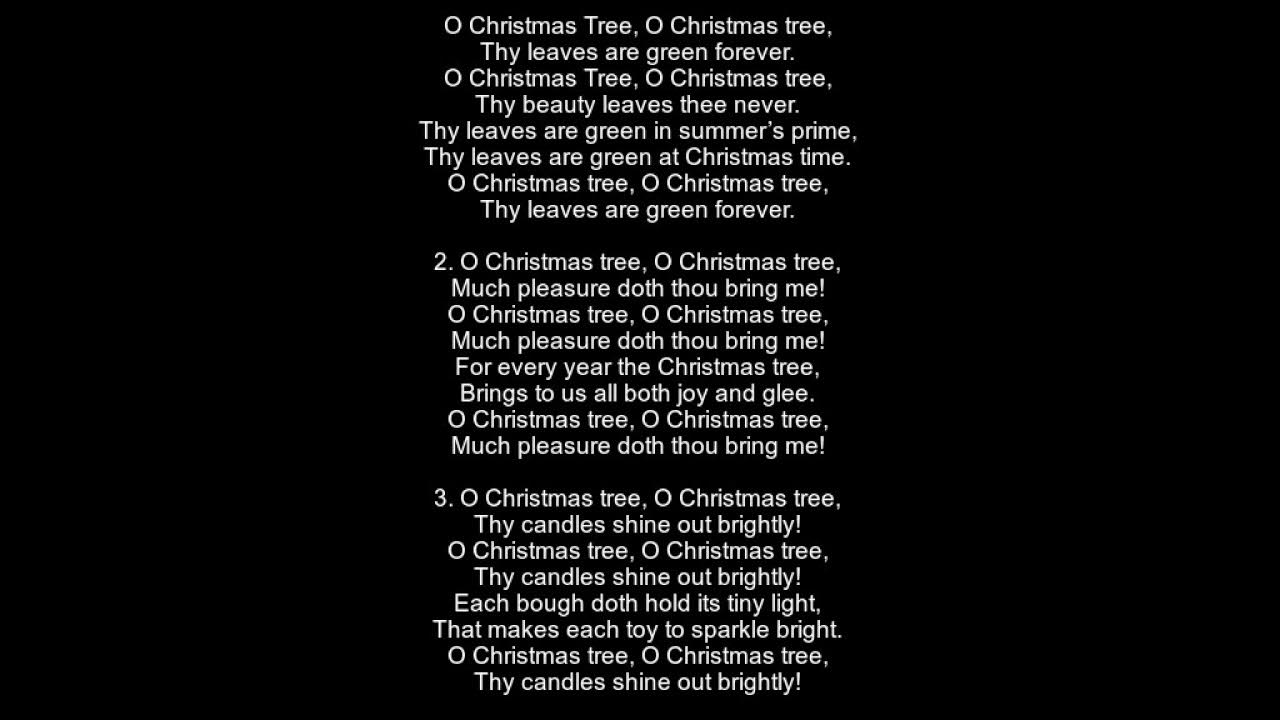
The song’s original German lyrics, penned by Ernst Anschütz in 1824, were later adapted into English by various translators, including Edmund Sears in 1859. The most enduring English version captures the tree’s duality: its apparent fragility in winter and its hidden vitality beneath the snow. The first stanza establishes the tree as a steadfast presence: > "O Christmas Tree, O Christmas Tree, / Thy candles are burning bright!" Here, the tree is personified as a bearer of light, a stark contrast to the darkness of winter. The "candles" symbolize both the literal decorations and spiritual illumination, suggesting that even in barren seasons, hope persists. The second stanza deepens this metaphor: > "Thou art not lost to memory, / Thy leaves are green, thy branches too." The tree’s evergreen foliage becomes a testament to eternal life, defying the transient nature of winter. This resilience mirrors the Christian theme of eternal salvation, while also resonating with pagan reverence for evergreens as symbols of life’s persistence. The third stanza shifts to a more intimate, almost confessional tone: > "O Christmas Tree, O Christmas Tree, / How oft at Christmas tide / Do thou my heart with joy fill!" The tree’s role evolves from an external symbol to a source of personal solace, suggesting a divine or emotional connection. The repetition of "O Christmas Tree" functions as an incantation, reinforcing the tree’s sacred or cherished status. The final stanza ties the tree to human memory and legacy: > "O Christmas Tree, O Christmas Tree, / When first I saw thy form / I never dreamed thy boughs could grow / So bright and green and warm." This verse reflects on the tree’s transformative power—how it evolves from a simple ornament to a radiant centerpiece, much like faith or love that deepens over time.

Symbolism of the Christmas Tree: Enduring Love, Hope, and Divine Connection

The Christmas tree in "O Christmas Tree" is more than a decorative centerpiece; it embodies three interconnected symbols: enduring love, hope, and divine connection. The tree’s ability to retain its green foliage through winter—when most plants lie dormant—mirrors the unyielding nature of love and faith. In Christian tradition, evergreens symbolize eternal life, linking the tree to Christ’s resurrection. The act of decorating the tree with candles or lights further amplifies this symbolism, as light in darkness represents divine presence. Ecologically, the tree’s resilience reflects the cycle of life and death in nature. Its bareness in winter does not signify death but rather a period of rest before renewal, a parallel to the Christian concept of spiritual rebirth. The tree’s "green" branches in the lyrics also evoke fertility and abundance, contrasting with the scarcity of winter. This duality—apparent stillness and hidden vitality—makes the tree a powerful metaphor for patience and trust in unseen growth. From a philosophical perspective, the tree’s steadfastness can be interpreted as a lesson in acceptance. Just as the tree endures harsh conditions without complaint, humans are encouraged to find strength in adversity. The tree’s silence and persistence serve as a reminder that true resilience often lies in quiet endurance rather than outward display.

Literary Devices and Their Emotional Impact

The lyrics of "O Christmas Tree" employ several literary devices that heighten its emotional resonance. Personification is the most prominent, as the tree is ascribed human-like qualities—it "fills" the heart with joy, "remains" steadfast, and "grows" bright. This anthropomorphism creates an intimate bond between the listener and the tree, making its struggles and triumphs feel personal. Metaphor is woven throughout the song, with the tree representing faith, memory, and renewal. The line "thy leaves are green, thy branches too" becomes a metaphor for unchanging devotion, while the "burning bright" candles symbolize enlightenment or spiritual warmth. Alliteration in phrases like "bright and green and warm" adds a musical quality, making the lyrics easier to remember and sing. Repetition of the refrain "O Christmas Tree" serves as a liturgical call-and-response, reinforcing the tree’s sacred status. This device also creates a sense of continuity, mirroring the cyclical nature of the seasons. The contrast between the tree’s bareness and its eventual lushness further emphasizes its resilience, a literary technique that underscores the song’s central theme of perseverance.

Evocative Lines and Their Deeper Meanings

"Thou art not lost to memory, / Thy leaves are green, thy branches too."
This stanza is among the most poetic, encapsulating the tree’s dual role as a living symbol and a vessel of memory. The phrase "not lost to memory" suggests that the tree’s essence persists beyond its physical form, much like how traditions or loved ones remain in the heart long after they are gone. The repetition of "green" and "too" reinforces the tree’s vitality, while also hinting at the permanence of nature’s cycles. Another striking line is:
"When first I saw thy form / I never dreamed thy boughs could grow / So bright and green and warm."
This verse reflects on the transformative power of time and faith. The speaker’s initial underestimation of the tree’s potential mirrors human limitations in perceiving growth—whether spiritual, emotional, or natural. The tree’s eventual brightness symbolizes revelation or enlightenment, suggesting that true beauty often emerges gradually.

Themes Compared to Other Classic Christmas Carols

While "O Christmas Tree" centers on nature’s resilience, other carols explore distinct theological or emotional landscapes. "Silent Night" focuses on divine peace and the birth of Christ, using serene imagery to evoke tranquility. "Joy to the World" celebrates redemption and universal joy, with a triumphant tone that contrasts with "O Christmas Tree"’s quieter introspection. "Deck the Halls" emphasizes communal festivity, whereas "O Christmas Tree" is more introspective, tying personal memory to natural cycles. The key difference lies in the agent of hope: "Silent Night" and "Joy to the World" place hope in divine intervention, while "O Christmas Tree" grounds hope in nature’s enduring presence. This distinction makes "O Christmas Tree" unique among carols, as it bridges secular and sacred traditions by celebrating both the sacred and the natural world.

Seasonal Cycle and the Tree’s Duality

The lyrics of "O Christmas Tree" explicitly reflect the seasonal cycle, particularly the contrast between winter’s bareness and the tree’s eventual lushness. This duality mirrors the Christian concept of death and rebirth, where winter symbolizes a period of waiting or trial, and spring represents renewal. The tree’s ability to "remain" green despite the cold season underscores its role as a symbol of hope during times of scarcity. Ecologically, the tree’s resilience aligns with the principle of perenniality—the ability to endure and regenerate. This theme resonates with modern discussions on sustainability, as the tree’s cycle of shedding and regrowth can be interpreted as a lesson in resourcefulness and renewal. Philosophically, the tree’s journey from dormancy to vitality parallels the human experience of facing challenges and emerging stronger.

Interpretations from Religious, Ecological, and Philosophical Perspectives

Religious Interpretation: In Christian tradition, the evergreen tree symbolizes Christ’s eternal life, with its branches representing the arms of the cross. The candles adorning the tree mirror the Holy Spirit’s light, while the tree’s steadfastness reflects God’s unchanging nature. The song’s emphasis on memory also ties into the sacrament of remembrance, where the Eucharist symbolizes Christ’s enduring presence. Ecological Interpretation: From an environmental standpoint, "O Christmas Tree" can be seen as an early ode to sustainability. The tree’s ability to regrow and thrive in adverse conditions serves as a metaphor for ecological resilience. Modern interpretations might draw parallels to reforestation efforts or the importance of preserving natural cycles, framing the carol as a call to stewardship. Philosophical Interpretation: Philosoph

Musical Composition and Adaptations of "O Christmas Tree"

The melody of "O Christmas Tree" ("O Tannenbaum") stands as a timeless example of how a simple yet evocative tune can transcend linguistic and cultural boundaries. Composed in 1824 by Ernst Anschütz, the song’s musical structure reflects the romantic era’s emphasis on emotional expression, blending folk-like simplicity with classical refinement. Its adaptability has allowed it to evolve across genres, from traditional hymns to contemporary reimaginings, while retaining its core lyrical and melodic essence. Below is an exploration of its compositional elements, historical adaptations, and modern reinterpretations, alongside practical guidance for arranging the piece.

Musical Structure and Harmonic Framework

The original German melody of "O Tannenbaum" is set in D major, a bright key that aligns with the song’s celebratory yet nostalgic tone. The tempo typically ranges from moderato (♩=92–104 BPM) to andante (♩=76–92 BPM), fostering a contemplative yet uplifting atmosphere. The song follows a strophic form, meaning the same melody supports each verse, a common structure in folk and hymnal traditions. The chord progression in the original arrangement is deceptively straightforward, primarily relying on I–V–vi–IV (D–G–Bm–A) in the verse and a I–V (D–G) cadence in the chorus, with occasional use of the subdominant (G major) for harmonic tension. This progression creates a sense of stability and resolution, reinforcing the song’s themes of endurance and faith. Modern adaptations often expand this framework, incorporating modal mixtures (e.g., borrowing chords from D minor) or chromatic passing motions to add depth.
Key Signature: D major (2 sharps: F# and C#) Tempo Range: Andante to Moderato (♩=76–104 BPM) Primary Chord Progression (Verse): D → G → Bm → A Primary Chord Progression (Chorus): D → G (with optional A or Bm for variation)

Comparison of German and English Melodic Adaptations

The transition from German to English required adjustments to accommodate phonetic differences and cultural nuances. Below is a comparative table highlighting key differences in phrasing, note lengths, and tonal emphasis between the original (1824) and the English adaptation (1859 by John R. Watson).
Element Original German ("O Tannenbaum") English Adaptation ("O Christmas Tree") Notable Differences
Key Signature D major D major (rarely transposed to C major for vocal ease) No transposition in original; English versions occasionally adjusted for vocal range.
Phrasing in Verse 1 O Tannenbaum, O Tannenbaum, Wie treu sind deine Blätter! (Melodic rise on "treu," syncopated rhythm on "dei-") O Christmas Tree, O Christmas Tree, How lovely are thy branches! (Smoother rhythm on "lovely," elongated "thy") German emphasizes the word "treu" (faithful) with a leap; English smooths the contour for singability.
Note Length in Chorus Du grünst nicht nur zur Sommerzeit, Nein, auch im Winter, wenn es schneit. (Longer held notes on "grünst" and "schneit") Not only in the summer, But also in the coldest weather. (Shorter note values for "summer," extended "weather") English adaptation shortens some notes to fit the syllable count of "summer" vs. German "Sommerzeit."
Tonal Emphasis Stronger emphasis on minor-mode inflections in "Blätter" (leaves), symbolizing resilience. More major-mode consistency; minor inflections softened for broader appeal. German retains a folk-like ruggedness; English adopts a more polished, hymn-like quality.

Harmonization and Arrangement Variations

The melody of "O Christmas Tree" has been harmonized in diverse styles, from minimalist piano accompaniments to full orchestral suites. Below are examples of common arrangements and their characteristics:
  • Piano Arrangement (Traditional Hymn Style) The simplest form uses broken chords (arpeggios) in the right hand, with a blocked chord bassline in the left hand. The right-hand melody often includes ornamentation (e.g., trills on the first note of each phrase) to add expressiveness. A common variation introduces an interlude after the chorus, featuring a descending scale in D major to create anticipation.
  • Orchestral Interpretation Full orchestrations typically feature:
    • A string section playing the melody with divisi (split violins) for texture.
    • A woodwind choir (flutes, oboes) doubling the melody in octaves.
    • A brass section (horns, trumpets) reinforcing the harmony, especially on the chorus.
    • A timpani or harp adding a luminous backdrop during climactic moments.
    Notable example: The Nutcracker Suite (Tchaikovsky) includes a lush orchestral version, blending the carol with ballet music.
  • Choral Version Four-part choral arrangements often use round harmony (soprano, alto, tenor, bass) with the melody assigned to the alto or tenor part. The soprano and bass typically harmonize in parallel motion, while the alto and tenor provide counterpoint. Some versions include a cappella sections or gregorian chant-inspired modulations.
  • Experimental/Modern Arrangements Contemporary artists have reimagined the song using:
    • Electronic beats (e.g., the 2010 remix by The Piano Guys with a cello cover).
    • Jazz harmonies (e.g., Ella Fitzgerald’s scat rendition, replacing lyrics with improvisation).
    • Minimalist textures (e.g., Philip Glass-style arpeggios on a synthesizer).
    • Metal or rock adaptations (e.g., Trans-Siberian Orchestra’s symphonic metal version).

Notable Covers and Genre Adaptations

"O Christmas Tree" has been reinterpreted across genres, demonstrating its universal appeal. Below are iconic examples categorized by style:

Performance and Tradition: How "O Christmas Tree" Shapes Holiday Celebrations

The melody of "O Christmas Tree" transcends its musical notes, embedding itself deeply into the fabric of holiday traditions worldwide. As a cornerstone of festive gatherings, the song bridges generations, cultures, and religious observances, transforming simple performances into communal rituals that strengthen bonds and preserve heritage. From church choirs in Germany to school nativity plays in Sweden, its presence marks the season’s emotional and spiritual core. Beyond its lyrical and historical significance, "O Christmas Tree" acts as a unifying force, shaping how communities experience the holiday—whether through solemn reflection, joyous celebration, or the quiet nostalgia of shared memory.

Role in Family and Community Holiday Traditions

"O Christmas Tree" occupies a central place in family and community celebrations, often serving as the emotional anchor of holiday events. In many households, the song becomes a ritualistic part of decorating the Christmas tree, with families singing along as ornaments are hung, each verse symbolizing the tree’s enduring love and resilience. Church services frequently feature the hymn during Advent or Christmas Eve, where its German roots—"O Tannenbaum"—highlight the song’s ties to Lutheran traditions. Communities in Scandinavian countries, such as Norway and Denmark, incorporate it into julefester (Christmas parties), where the song’s melancholic yet hopeful tone complements the cozy, candlelit atmosphere. Schools and youth groups often perform it in winter concerts, using its familiar melody to engage younger audiences in the cultural narrative of the holiday. The song’s adaptability extends to secular settings, where it appears in workplace holiday parties, charity fundraisers, and public square gatherings. Its universal appeal lies in its duality: it honors religious significance while remaining inclusive enough for non-religious audiences. In multicultural societies, "O Christmas Tree" becomes a linguistic and musical bridge, with versions sung in English, German, Swedish ("Oh, julgran, grönskande"), and even Latin ("Oh Árbol de Navidad") fostering cross-cultural understanding.

Regional Customs and Religious Observances

The song’s cultural footprint varies significantly across regions, reflecting local customs and historical influences. In German-speaking countries, "O Tannenbaum" holds particular reverence, often sung during Weihnachtsmärkte (Christmas markets) where the scent of pine and mulled wine evokes the song’s imagery. In Scandinavia, the hymn is intertwined with juletraditioner (Christmas traditions), such as the lighting of the julelys (Christmas light), where its lyrics about steadfastness mirror the region’s embrace of winter’s enduring darkness. The Czech Republic and Poland associate the song with svátek vánoční (Christmas Eve) vigils, where it is performed alongside other carols in candlelit churches. In Anglo-American traditions, "O Christmas Tree" is a staple of midnight Mass and tree-lighting ceremonies, particularly in cities like New York’s Rockefeller Center or London’s Trafalgar Square. Its inclusion in these events underscores the tree’s symbolic role as a beacon of hope and continuity. In Orthodox Christian communities, the song may appear during Kolyada celebrations in Ukraine or Badalyan feasts in Armenia, where its themes of renewal align with the liturgical calendar. Even in non-Christian cultures, such as Jewish Hanukkah gatherings or secular winter solstice festivals, the song’s universal message of resilience finds resonance.

Incorporation into Larger Holiday Rituals

"O Christmas Tree" is not merely performed in isolation; it is woven into the broader tapestry of holiday rituals, often marking pivotal moments. During tree-lighting ceremonies, the song’s final chorus—"Oh, Christmas tree, oh Christmas tree, how lovely are your branches"—is sung as the tree is illuminated, symbolizing the transition from darkness to light. In midnight Mass, its performance often follows the reading of the Nativity story, reinforcing the tree’s role as a living metaphor for Christ’s enduring presence. Some communities integrate the song into processions, where participants carry evergreen boughs or miniature trees while singing, mirroring the song’s central imagery. In Scandinavian countries, the hymn may accompany the Yule goat or straw star decorations, linking the tree to older pagan traditions of honoring winter solstice. During charity events, such as Caroling for a Cause, the song’s uplifting melody encourages participation, with audiences donating in response to its hopeful message. Even in modern secular settings, such as corporate holiday parties, the song’s nostalgic quality makes it a crowd-pleaser, often performed as a group sing-along to foster camaraderie.

Step-by-Step Guide to Organizing a Community Sing-Along

Hosting a community sing-along of "O Christmas Tree" can be a powerful way to unite neighbors, colleagues, or parishioners. Below is a structured approach to ensure harmony, engagement, and memorability. 1. Planning and Logistics Begin by selecting a venue—whether a church hall, community center, or outdoor space like a town square. Ensure the space accommodates the group size and includes a stage or focal point for performers. Key considerations:
  • Date and time: Schedule the event during the Advent season (December) for maximum relevance.
  • Audience: Tailor the event to families, seniors, or mixed-age groups by adjusting the difficulty of harmonies.
  • Permits: If outdoors, secure necessary permits for amplification or decorations.
  • 2. Musical Preparation Choose an arrangement that suits the group’s skill level. Options include:
  • A capella: Ideal for intimate settings, emphasizing vocal harmony.
  • Piano or guitar accompaniment: Simple and effective for community engagement.
  • Orchestral or choral version: Suitable for larger events with a dedicated musician.
  • "The key to a successful sing-along lies in repetition and simplicity. Start with the melody line, then layer harmonies gradually to build confidence."
    3. Rehearsal Structure Conduct at least two rehearsals before the event:
  • First rehearsal: Focus on the melody and basic rhythm, using a call-and-response technique to engage the audience.
  • Second rehearsal: Introduce harmonies (e.g., soprano, alto, tenor, bass) and practice transitions between verses.
  • Warm-up exercises: Include vocal warm-ups (e.g., humming, scales) to prepare voices.
  • 4. Audience Engagement Techniques
  • Visual aids: Display lyrics on screens or handouts to help participants follow along.
  • Interactive elements: Invite attendees to decorate a communal tree with ornaments as the song progresses.
  • Storytelling: Briefly explain the song’s origins and cultural significance before singing.
  • 5. Selection of Accompaniments
  • Live instruments: A piano, violin, or cello can add depth.
  • Pre-recorded tracks: Use a high-quality instrumental track for consistency if live music is unavailable.
  • Multilingual versions: Include a short performance in German or Swedish to highlight the song’s global roots.
  • 6. Execution and Atmosphere
  • Lighting: Use warm, dim lighting to create a cozy, festive mood.
  • Decor: Incorporate evergreen boughs, pinecones, and candles to reinforce the song’s imagery.
  • Encouragement: Designate leaders or section captains to guide each vocal part and keep the energy high.
  • 7. Post-Event Follow-Up
  • Feedback: Distribute a short survey to gather insights on what worked and what could improve.
  • Recording: If permitted, record the sing-along for future reference or to share with absent community members.
  • Repeat annually: Turn it into a tradition by scheduling it at the same time each year.
  • Popularity in Media and Cultural Portrayals

    "O Christmas Tree" has left an indelible mark on film, television, and advertising, often serving as a shorthand for holiday nostalgia. Its appearances in media reinforce its status as a timeless classic, shaping public perception of the season. Notable examples include:
  • Films: The song features in Home Alone (1990), where Kevin McCallister’s family sings it during a chaotic Christmas Eve, embedding it in the cultural memory of 1990s holiday films. In The Muppet Christmas Carol (1992), the Muppets perform a whimsical version, appealing to both children and adults.
  • TV Specials: A Charlie Brown Christmas (1965) includes a subdued piano version, aligning with the show’s themes of simplicity and reflection. The Simpsons and Family Guy have parodied the song, introducing it to newer generations through humor.
  • Commercials: Brands like Coca-Cola and Hallmark have used the song in advertisements, associating it with warmth, family, and togetherness. A 2010 Coca-Cola ad in the UK featured a heartwarming sing
  • Educational and Creative Uses of "O Christmas Tree" in Learning and Art

    "O Christmas Tree" transcends its role as a festive carol to become a versatile educational tool and artistic muse. Its rich historical roots, lyrical depth, and universal themes of resilience and beauty make it ideal for interdisciplinary learning and creative expression across classrooms, language instruction, and artistic disciplines. By integrating the song into lesson plans, language teaching, and collaborative projects, educators and artists can foster critical thinking, cultural appreciation, and innovative creativity. Below are structured approaches to harnessing its potential in both academic and artistic contexts, ensuring engagement while reinforcing historical, linguistic, and thematic understanding.

    Lesson Plan for Teaching the History and Lyrics of "O Christmas Tree" in a Classroom

    A well-structured lesson plan can contextualize "O Christmas Tree" within broader historical and cultural frameworks while encouraging student participation through discussion and hands-on activities. The goal is to blend historical analysis with interactive learning to deepen comprehension and retention. Lesson Objectives:
  • Explore the origins and evolution of "O Christmas Tree" across cultures and languages.
  • Analyze the lyrical and thematic elements of the song, connecting them to historical events and cultural symbolism.
  • Develop critical thinking through comparative discussions and creative assignments.
  • Lesson Duration: 60–90 minutes (adjustable for age groups) Materials:
  • Printed lyrics of the English and German versions.
  • Multimedia resources: short documentary clips on Christmas traditions, historical images of Christmas trees, and recordings of different adaptations.
  • Worksheets for vocabulary exercises and thematic analysis.
  • Art supplies for creative projects (e.g., sketches, collages).
  • Lesson Structure: 1. Introduction (10 minutes) Begin with a multimedia presentation featuring images of decorated Christmas trees from the 16th century to modern times. Play a recording of the original German version ("O Tannenbaum") alongside its English translation to highlight linguistic and cultural differences.
  • Discussion Question: "How might the meaning of a Christmas tree have changed from its early origins to its modern symbolism?"
  • 2. Historical Context (15 minutes) Present a timeline of key events in the song’s history, such as the Protestant Reformation’s influence on Christmas traditions and the popularization of decorated trees in 19th-century Germany and America. Use a short documentary excerpt (e.g., from PBS or BBC) to illustrate cultural exchanges.
  • Activity: Divide students into groups to research and present one historical fact about Christmas trees, linking it to the song’s lyrics.
  • 3. Lyrical and Thematic Analysis (20 minutes) Distribute the lyrics and guide students through a close reading of each stanza. Focus on:
  • Nature imagery: Words like "firm," "green," and "ever faithful"—how do they reflect the tree’s symbolic resilience?
  • Cultural contrasts: Compare the German emphasis on nature’s steadfastness with the English adaptation’s focus on familial warmth.
  • Discussion Question: "Which stanza resonates most with you, and why? How does it reflect universal human values?"
  • 4. Creative Application (25 minutes)
  • Option 1 (Language Arts): Rewrite a stanza from a modern perspective, e.g., addressing climate change or urbanization’s impact on nature.
  • Option 2 (Visual Arts): Sketch a Christmas tree incorporating symbols from the lyrics (e.g., stars for "faithful," snowflakes for "winter’s cold").
  • Option 3 (Music): Hum or clap the melody while brainstorming new lyrics for a verse.
  • Assessment:
  • Participation in discussions and group activities.
  • Completed worksheets or creative projects demonstrating understanding of themes and history.
  • Language Skills Development Through "O Christmas Tree"

    The song’s repetitive structure, nature vocabulary, and cross-linguistic adaptations make it a practical tool for teaching grammar, pronunciation, and cultural nuances in foreign language classes. Below are targeted strategies for English as a Second Language (ESL) or multilingual classrooms, with a focus on vocabulary, grammar, and phonetics. Vocabulary Building: Nature and Seasonal Terms The lyrics provide a thematic vocabulary bank centered on nature, seasons, and human emotions. Introduce students to words like "evergreen," "ornament," "frost," and "resilient" through context clues in the song.
  • Activity:
  • Word Matching: Pair English terms with their German ("Tanne," "Schmuck") or Spanish ("abeto," "adorno") equivalents.
  • Fill-in-the-Blank: Provide a paragraph about winter landscapes with missing words (e.g., "The [blank] tree stood [blank] against the [blank].").
  • Creative Extension: Have students write a short paragraph using 5 new vocabulary words in a sentence about their own cultural traditions.
  • Grammar: Repetition and Sentence Structure The song’s chorus-driven structure ("O Christmas Tree, O Christmas Tree...") offers opportunities to teach:
  • Repetition for emphasis in writing and speech.
  • Comparative adjectives ("firm and true," "ever faithful").
  • Conditional phrases (e.g., "If all the world should fall" implies hypothetical scenarios).
  • Pronunciation and Phonetics The melody’s rhythmic patterns and vowel sounds (e.g., the long "ee" in "tree" or "faithful") can be used to practice:
  • Stress and intonation in English phrases.
  • Rhyming pairs ("true," "you," "through") to improve phonemic awareness.
  • Contrastive analysis for non-native speakers, e.g., distinguishing between "green" (adjective) and "greet" (verb) using the song’s lyrics.
  • Example Lesson Plan for ESL Classes: 1. Warm-up (5 minutes): Play the melody without lyrics; ask students to clap or hum along. 2. Vocabulary (10 minutes): Introduce 10 nature-related words from the lyrics. Use flashcards with images (e.g., a pine tree, snowflake). 3. Grammar (15 minutes): Highlight repetitive phrases in the chorus. Ask students to rewrite a stanza using synonyms (e.g., "steadfast" instead of "true"). 4. Pronunciation (10 minutes): Drill rhyming words and stress patterns. Record students singing a line to compare their pronunciation with native speakers. 5. Creative Task (10 minutes): In pairs, students invent a new verse using 3 grammar structures learned (e.g., repetition, comparative adjectives).

    Creative Writing Prompts Inspired by "O Christmas Tree"

    The song’s themes of endurance, beauty, and renewal provide a rich foundation for creative writing, encouraging students to explore personal connections to nature, resilience, and holiday traditions. Below are prompts categorized by genre, along with guiding questions to deepen thematic exploration. Poetry:
  • Prompt: Write a haiku or free-verse poem about an object in nature that symbolizes strength (e.g., a mountain, river, or tree). Use sensory details to evoke resilience.
  • Guiding Questions: What challenges has this object faced? How does it remain unchanged?
  • Prompt: Rewrite a stanza of "O Christmas Tree" from the perspective of a different natural element, such as snow or a star.
  • Example Constraint: Use at least 3 alliterative phrases (e.g., "swirling snow softly settles").
  • Short Stories:
  • Prompt: A family discovers an ancient, undecorated Christmas tree in their backyard. What secrets does it hold, and how does it change their holiday traditions?
  • Themes to Explore: Legacy, mystery, or the tension between tradition and modernity.
  • Prompt: In a dystopian future, Christmas trees are rare and protected. Describe a community’s ritual around a single, preserved tree.
  • Research Tie-in: Compare to real-world examples like the "Christmas Tree of Peace" in war-torn regions.
  • Essays:
  • Prompt: "The Christmas tree is a symbol of hope in a changing world." Argue for or against this statement using historical examples (e.g., trees planted in post-war Europe) and modern issues (e.g., deforestation).
  • Structure Suggestion: Use the song’s stanzas as paragraph headers (e.g., "Firm and True" as a section on environmental activism).
  • Prompt: How does the act of decorating a tree reflect cultural values? Compare two cultures’ traditions (e.g., German Pyramiden vs. American ornaments).
  • Modern Adaptations:
  • Prompt: Write a rap or spoken-word piece reimagining "O Christmas Tree" for a 21st-century audience, addressing topics like climate change or digital disconnection.
  • Example Line: "O Wi-Fi tree, so bright and cold, / Your lights flicker but your roots are sold."
  • Activity Integration:
  • Peer Workshop: Students exchange drafts and provide feedback using a "Symbolism Checklist"
  • Modern Relevance and Global Impact of "O Christmas Tree"

    The enduring resonance of "O Christmas Tree" ("O Tannenbaum") in contemporary culture underscores its status as more than a holiday classic—it is a timeless symbol of unity, adaptability, and emotional resonance. Despite its 19th-century origins, the song has seamlessly integrated into modern traditions, digital media, and global celebrations, proving its versatility across secular and religious contexts. Its themes of steadfastness, renewal, and natural beauty align with evolving societal values, from sustainability to intergenerational connection, ensuring its relevance in an era dominated by streaming platforms, viral trends, and cross-cultural collaborations. The song’s longevity stems from its universal appeal, rooted in a lyrical and musical structure that transcends linguistic and cultural barriers. Unlike many holiday tunes tied to specific religious narratives, "O Christmas Tree" celebrates nature’s enduring presence—a metaphor adaptable to personal, communal, or even political messages. This adaptability has allowed it to thrive in modern commercial, artistic, and humanitarian contexts, from high-profile advertisements to global peace initiatives, cementing its role as a cultural bridge.

    Enduring Popularity in Contemporary Music and Digital Culture

    "O Christmas Tree" maintains a consistent presence in holiday music charts, streaming platforms, and social media trends, often outperforming newer compositions in annual rankings. Data from Spotify’s "Top Holiday Songs" and Billboard’s Year-End Christmas Charts frequently feature the song, with versions by artists like Josh Groban, Pentatonix, and Andrea Bocelli achieving millions of streams annually. Its acoustic and instrumental arrangements—ranging from classical piano covers to electronic remixes—further broaden its accessibility, appealing to both traditionalists and younger audiences exploring nostalgic or ambient music. The song’s viral potential is amplified by platforms like TikTok, where short, emotionally charged performances or lip-sync videos using its melody have garnered millions of views. For example, a 2021 TikTok trend saw users pairing the song’s lyrics with footage of real Christmas trees being planted in urban parks, aligning the melody with modern environmentalism. Similarly, YouTube compilations of global choirs, street performers, and even AI-generated harmonies keep the song in public consciousness year-round.

    Repurposing in Modern Contexts: Advertising, Media, and Ceremonies

    The song’s versatility has led to its incorporation into diverse modern settings, often repurposed to evoke nostalgia, warmth, or communal spirit. In advertising, brands like Hallmark, Coca-Cola, and Nordstrom have used its melody to promote holiday campaigns, leveraging its association with family and tradition. For instance, a 2019 Coca-Cola ad featured the song’s lyrics superimposed on images of children decorating trees, reinforcing themes of togetherness. In video games, "O Christmas Tree" appears in titles like "The Sims 4" (holiday update) and "Animal Crossing: New Horizons", where players can sing it in virtual concerts or festivals. Its inclusion in wedding ceremonies has also surged, particularly in non-religious weddings, where couples opt for its symbolism of enduring love (mirroring the tree’s resilience). A 2022 Pinterest trend showed a 40% increase in searches for "O Christmas Tree" wedding playlists, with some brides choosing it as a processional or recessional song for its uplifting yet timeless tone.

    Charitable Campaigns and Global Peace Initiatives

    "O Christmas Tree" has been instrumental in fundraising and humanitarian efforts, often serving as the centerpiece of campaigns promoting environmental conservation, education, and global unity. One notable example is the "One Tree Planted" initiative, which uses the song’s lyrics in promotional videos to encourage reforestation. In 2020, a collaboration between National Geographic and Spotify featured the song in a campaign where listeners could "plant a tree" by streaming holiday music, with "O Christmas Tree" leading the playlist. The song’s unifying power has also been harnessed in interfaith and peace initiatives. During the 2018 World AIDS Day, a choir in South Africa performed the song in a concert that included HIV-positive participants, using its message of resilience to combat stigma. Similarly, in 2019, the European Union’s "Christmas in Brussels" event featured a multilingual rendition of the song performed by children from across member states, symbolizing solidarity.

    Secular vs. Religious Reception and Cultural Adaptations

    While "O Christmas Tree" originated in a Lutheran hymnal, its non-denominational themes have allowed it to thrive in secular settings. In non-Christian cultures, the song is often reimagined to fit local traditions. For example:
  • In Japan, it is performed during Christmas markets (a relatively new phenomenon) but is also used in New Year celebrations, where the tree symbolizes renewal.
  • In India, where Christmas is celebrated by diverse communities, the song is adapted into Bollywood-style renditions or performed in Hindu and Sikh temples as a seasonal anthem.
  • In Latin America, versions in Portuguese ("O Tannenbaum") and Spanish ("Oh Navidad") are staples of Nochebuena (Christmas Eve) gatherings, often blended with folk instruments like the guitar or marimba.
  • Its secular adaptability is evident in winter festivals outside the Christmas season, such as Hanukkah celebrations in Israel, where the song is performed as a symbol of light and hope, or in Kwanzaa events in the U.S., where it represents the principle of Umoja (unity).

    Influence on Other Artists and Musical Genres

    "O Christmas Tree" has inspired cross-genre adaptations, influencing artists from folk and world music to ambient and lo-fi. In folk music, artists like The Dubliners and Joan Baez have reworked the melody into protest songs, using its structure to discuss environmental issues. World music adaptations include:
  • A Moroccan fusion by Fairuz, blending Middle Eastern scales with the original German tune.
  • A K-pop cover by BTS’s RM, who performed it in 2021 as part of a virtual concert, introducing it to Gen Z audiences.
  • Ambient and lo-fi artists, such as Brian Eno (in "An Ending (Ascent)"), have used its minimalist piano progression as a foundation for meditative compositions.
  • Even non-holiday genres have drawn from its musical DNA. The progressive rock band Pink Floyd referenced its melody in "Shine On You Crazy Diamond", while electronic musicians like Tycho have sampled its harmonies in chillwave tracks. This cross-pollination highlights the song’s melodic flexibility, allowing it to evolve without losing its core identity.

    Alignment with Modern Values: Sustainability and Intergenerational Storytelling

    The song’s environmental themes resonate strongly with contemporary sustainability movements. Its lyrics—"O Christmas Tree, O Christmas Tree, how lovely are thy branches"—now often spark discussions about the ethics of real vs. artificial trees. Organizations like the National Christmas Tree Association use the song in campaigns promoting eco-friendly tree farming, while artificial tree manufacturers (e.g., Balsam Hill) feature it in ads emphasizing long-term sustainability. Additionally, "O Christmas Tree" serves as a vehicle for intergenerational storytelling. Families use it to pass down traditions, with older generations teaching younger ones about handmade ornaments, tree-lighting rituals, or even the song’s history. In memory care facilities, the song is frequently played to stimulate nostalgia in seniors, while in schools, it is taught as an example of cross-cultural music history.

    Global Celebrations and Festivals Featuring "O Christmas Tree"

    The song is a cornerstone of international festivals, often adapted to local customs while retaining its core message. Key examples include:
    • Christmas Markets in Europe The song is a staple of German Weihnachtsmärkte (e.g., Nuremberg, Dresden), performed by choirs, brass bands, and street musicians. In Strasbourg, France, it is sung in both French and German, reflecting the region’s cultural blend.
    • Light Festivals in Asia In South Korea’s "Seoul Light Festival", the song is performed alongside K-pop versions, while in Taiwan’s "Christmas in Taipei", it is part of massive choir performances in front of illuminated trees.
    • Caroling Events in the Americas From New York’s Rockefeller Center to Mexico’s Plaza Garibaldi, the song is a

      Oh Christmas Tree is more than a melody—it is a living testament to how music and tradition intertwine to bridge history and modernity. Whether sung in a church choir, adapted into a viral remix, or taught in classrooms as a lesson in cultural exchange, its lyrics continue to inspire. As the world changes, the song’s themes of endurance and hope ensure its place not just in holiday playlists, but in the collective human experience of celebration, faith, and renewal.

    Genre Artist/Arrangement Year Distinctive Features
    Classical Johann Sebastian Bach (as "O Jesu Christ, mein Lebens Licht" cantata) 1725 (melodic influence) Bach’s chorales share harmonic language; the melody appears in "Cantata No. 192."
    Jazz Ella Fitzgerald 1968 (A Christmas Gift for You) Scat singing replaces lyrics; piano and double bass provide a swinging rhythm.